

When your child doesn't want to go to the other parent's house
In this guide
- Why it happens
- 1. Listen, without leading
- 2. Stay warm and steady
- 3. Keep the handover short
- 4. Tell the other parent, in writing
- 5. Write down what happened, the same day
- 6. Don't ask them to report back
- 7. Follow the plan, unless there's a real concern
- 8. Get help if it keeps happening
- Look after yourself
- Questions parents ask
- Try Clarity Witness
It's handover day, and your child won't put their shoes on. Or they cry in the car, or say they don't want to go, or ask to stay "just this once". It's one of the hardest moments in co-parenting, and there's rarely an easy answer.
It can happen to either parent: the one whose house the child doesn't want to leave, and the one whose house they don't want to go to. This guide covers why it happens, what to say, how to handle the handover itself, what to write down, and when it's time to get help. It also shows how Clarity Witness can keep the facts straight while you focus on your child.
Why it happens
There are many reasons a child resists a handover, and most of them are ordinary:
- They're in the middle of something fun, or tired, or hungry
- Transitions are hard for them, whichever way they're going
- Different rules at each home, and they prefer one set
- They miss the parent they're leaving, and don't know how to say it
- They've picked up on tension between the adults
- Something at the other home is worrying them
The last one matters most, and it's the hardest to tell apart from the others. That's why listening, without leading, comes first.

1. Listen, without leading
Ask open questions and let your child answer in their own words. "You seem worried about going. Do you want to tell me about it?" is very different from "Is something bad happening at your dad's?"
Leading questions can put ideas in a child's head, or make them feel they have to pick a side. Keep your face and your voice neutral, even if what they say worries you. If they don't want to talk, that's fine too.
2. Stay warm and steady
Kids take their cue from you. If you seem anxious, relieved or annoyed, they notice. Most children settle far faster when the adult in front of them is warm, confident and clear that the plan is happening.
Avoid promises you can't keep, like "You won't have to go next time", and avoid making it about you: "I'll be so lonely without you" puts a weight on them they can't carry.
3. Keep the handover short
Long goodbyes and negotiations at the door tend to make things harder. A hug, a familiar phrase, and a clear handover usually work better than twenty minutes of persuading. If it helps, give younger kids a small routine: the same words, a special item that travels with them, a plan for when you'll talk next.
Keep adult conversations out of it. The doorstep isn't the place to discuss why it's happening.
4. Tell the other parent, in writing
Whichever side of the door you're on, let the other parent know what happened - briefly, factually, and without blame. They may know something you don't, or have ideas that help.
In Clarity Witness: send it in the co-parenting chat. It's timestamped, it can't be edited or deleted, and there's one clear version of what was said.
5. Write down what happened, the same day
Note the facts: the date, the time, what your child said in their own words, how long it took them to settle, and anything that seemed to help. Leave out your guesses about why.
Over a few weeks, this tells you a lot. Is it every handover, or only Sundays? Only after a certain activity? Only in one direction? Is it getting better or worse?
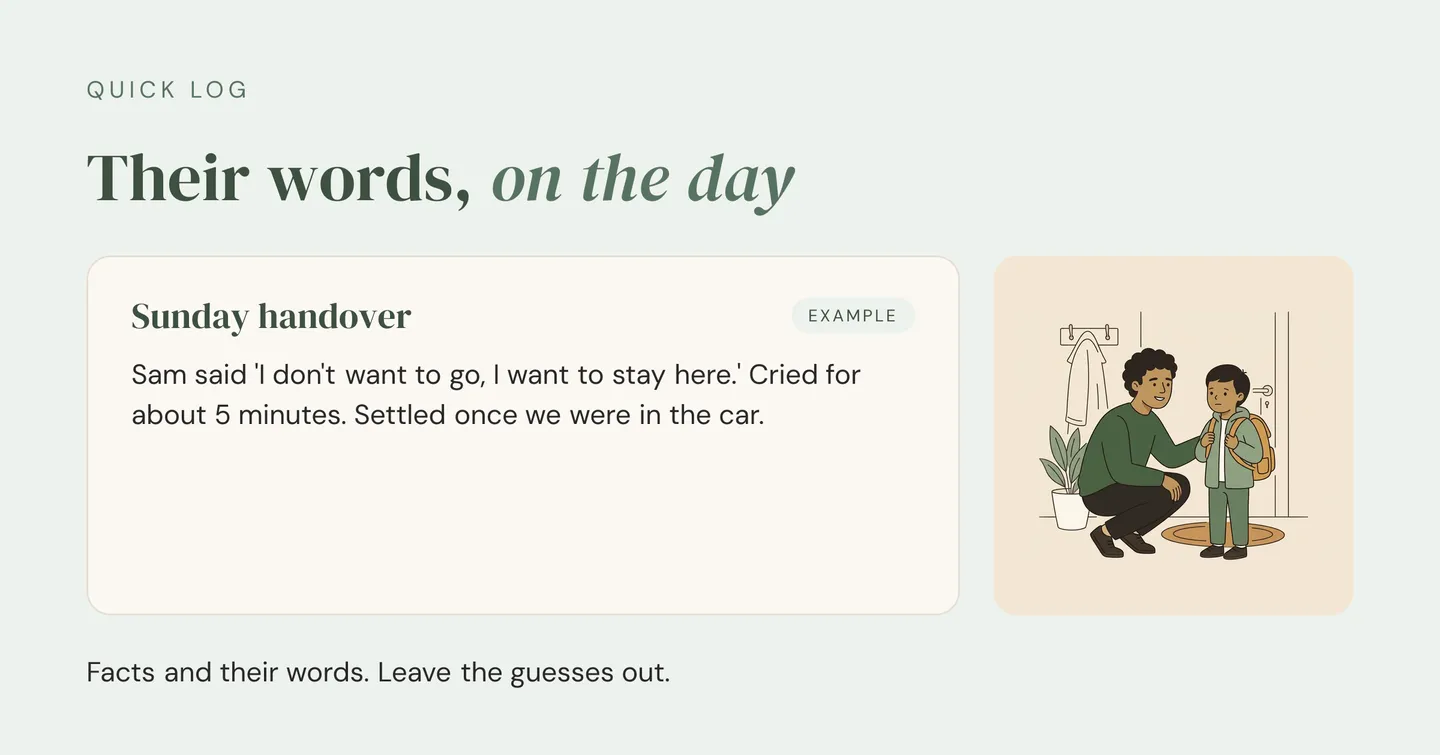
In Clarity Witness: log it with the quick log on your Today page, and tag your child and the other parent. Witness reads your entries over time and points out what keeps happening, with the dates behind it, such as handovers that are hard on the same day each week.
6. Don't ask them to report back
It's natural to want to know what's going on at the other home. But questioning a child after every handover can make the problem worse, and it can make them feel like a messenger. If they bring something up, listen and note it in their words. Don't push for more.
7. Follow the plan, unless there's a real concern
In most cases, the best thing for a child is a steady, predictable schedule, even when handovers are hard. Keeping a child back because they didn't want to go can turn into a pattern that's hard to undo, and it can cause problems for you if the plan is ever reviewed.
If you genuinely believe your child would be at risk there, that's different. Speak to your attorney straight away, and follow the advice you're given. Don't make that call alone at the door unless there's immediate danger.
8. Get help if it keeps happening
If the resistance goes on for weeks, gets stronger, or comes with changes in sleep, eating, school or mood, it's time to bring in someone who can help:
- Your child's pediatrician or school counselor
- A family therapist who works with separated families
- Your attorney or mediator, if the schedule itself may need to change
- The guardian ad litem, if one is involved
They'll want facts, not impressions. A dated record of each handover - what was said, what helped - makes that conversation much easier.
Coming soon in Clarity Witness: a way to share what you choose with your attorney, guardian ad litem or therapist, and briefings that turn your record into a clear, dated summary.
Look after yourself
Watching your child struggle at a handover is painful, whichever side of the door you're on. It's easy to blame yourself or the other parent. Try to remember that a lot of handover resistance is about transitions, not about either of you. Talk it through with someone you trust, away from the kids.
Questions parents ask
Should I let my child decide whether to go? Usually not, especially younger children. Kids need to know the adults are in charge of the schedule. Older children's views matter more, and it's worth raising with the other parent or a mediator.
What if my child says something worrying about the other home? Stay neutral, listen, and write it down in their words the same day. Don't question them for more. Talk to your attorney, and if your child is in danger, call 911.
What if the other parent blames me? Don't argue it by text. Reply briefly, stick to facts, and keep your own record. A steady, factual record speaks for itself.
Does it get better? Often, yes. Many children settle as routines become familiar. If it isn't improving, that's a sign to get help, not a failure.