

What to write down after every handover (and what to leave out)
In this guide
Handovers are where small problems repeat. A pickup that's an hour late, a bag that doesn't come back, a change sprung on you at the door. One of these on its own is easy to forget. Ten of them, written down plainly on the day they happened, tell a clear story.
This guide covers what to write down, what to leave out, and how to keep it all in one place without it taking over your evening.
Write it down the same day
Memory blurs fast, especially after a stressful exchange. And when it matters, it's often your memory against someone else's. A two-minute note written the same day carries far more weight than a long account written a month later.
It doesn't need to be polished. It needs to be dated, factual and written while the details are fresh. Many parents do it in the car before driving off, or as soon as they're home.
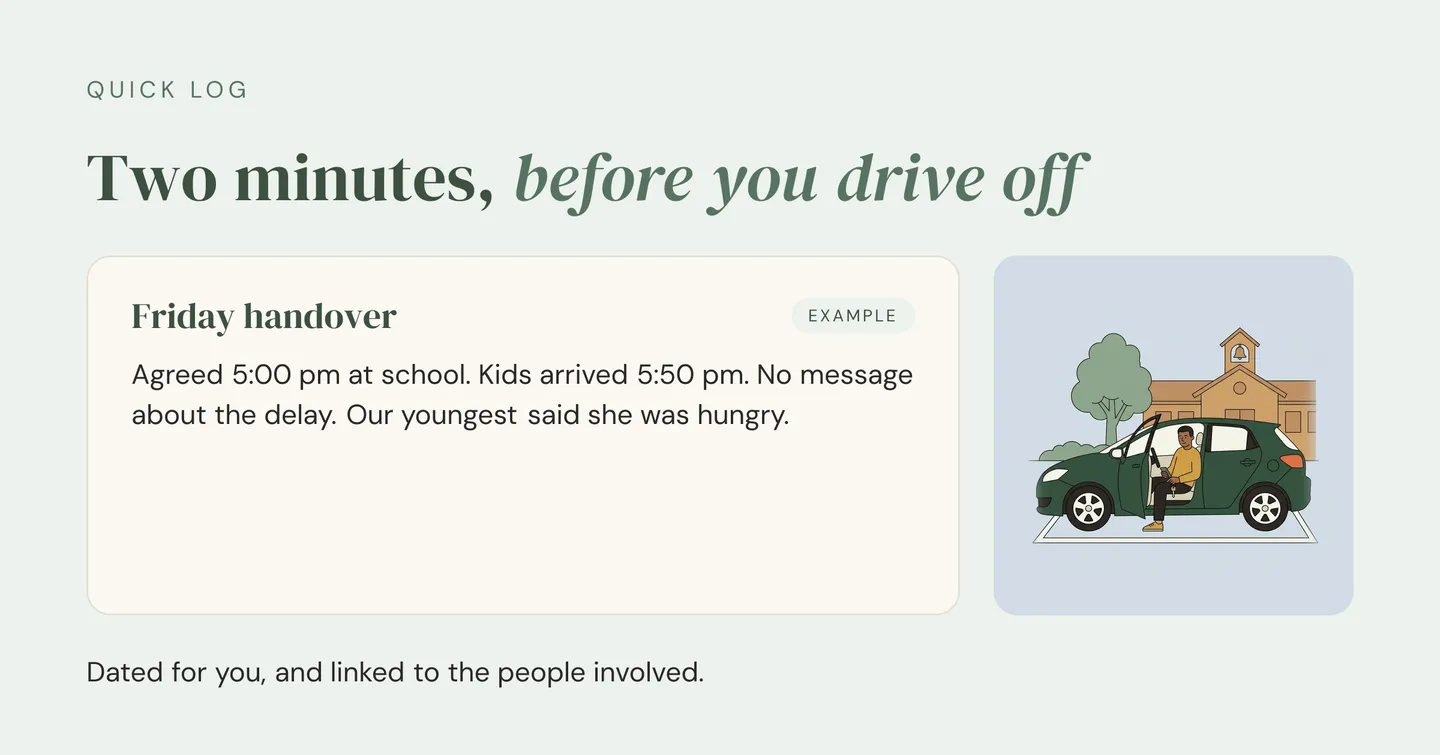
In Clarity Witness: the quick log on your Today page is made for this. Open it on your phone, write a few lines, and the entry is dated for you. It takes about as long as sending a text.
The five things to note
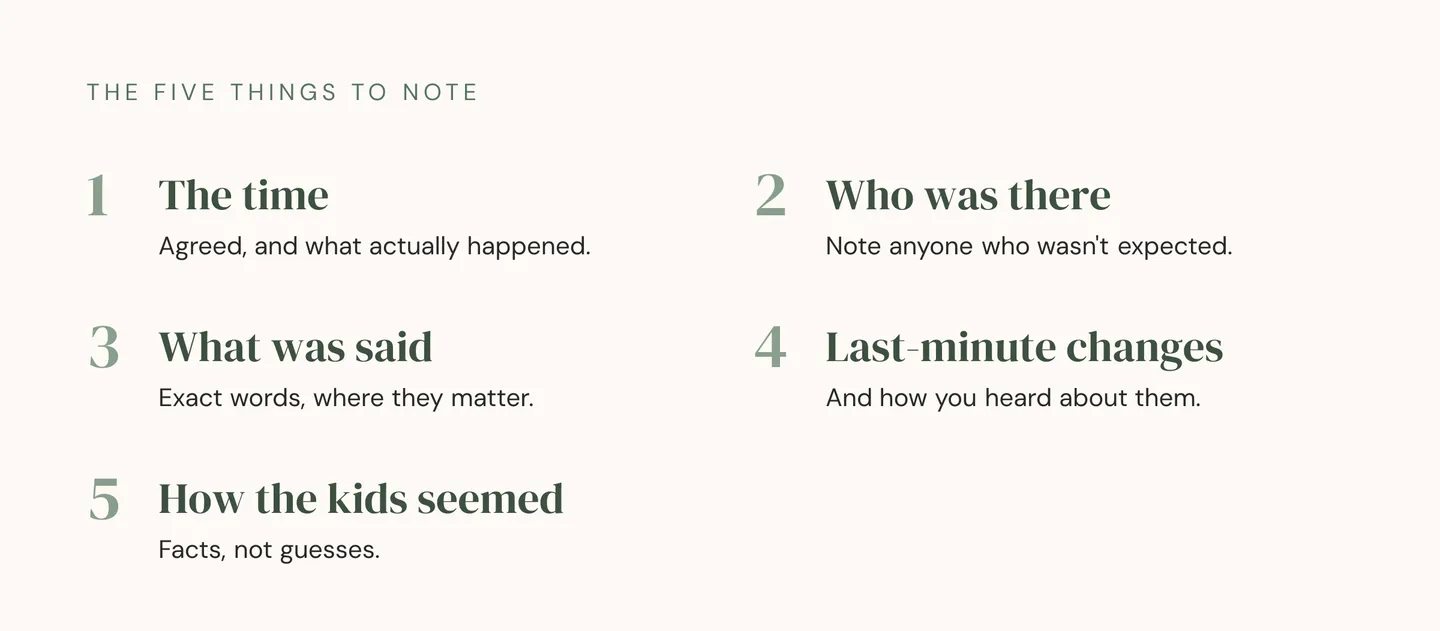
- The time agreed, and the time it actually happened. "Agreed 5:00 pm, kids handed over 6:10 pm" is far more useful than "late again".
- Who was there. The other parent, a new partner, a grandparent, a friend. Note anyone who wasn't expected.
- What was said, using the exact words where they matter. Your summary of a conversation is easy to dispute. The words themselves are not.
- Any change made at the last minute, and how you heard about it. A text at 4:45 pm, a call from the doorstep, or nothing at all.
- How the kids seemed, as facts rather than guesses. "Didn't talk much in the car." "Asked to call their dad." "Hadn't eaten." Leave the interpretation out.
In Clarity Witness: tag the people involved and each entry is linked to them, so later you can see everything about a particular person or a particular handover in one place.
What to leave out
What you leave out matters as much as what you put in. A record that reads as factual and fair is far more useful than one that reads as angry.
- Labels. Words like "narcissist", "liar" or "crazy" describe a person, not what happened. Even if you believe they're true, describe the behavior instead: "Changed the pickup time three times this week."
- Guesses about motives. You can't know why someone did something. Write what they did.
- Feelings presented as facts. It's fine to note that you felt anxious or upset. Keep it separate from what happened, and label it as your feeling.
- Second-hand stories. If you didn't see or hear it yourself, either leave it out or say clearly where it came from.
- Questions to the kids. Don't ask your children to report on the other home. If they bring something up, note it in their words and leave it there.
A weak note and a strong note
Here's the same handover written two ways.
The second one is more neutral, more specific and much harder to argue with. It also takes about the same time to write.
Keep it all in one place
A folder of screenshots, a notes app, an email to yourself and a paper diary don't add up to a record. When the time comes to show someone what's been happening - your attorney, a mediator, a counselor - you want one dated timeline, with the messages and photos that go with each day.
In Clarity Witness: your timeline is that one place, with every entry in date order and linked to the people involved. Your messages with the other parent live in the same app, and your record is private: nobody else sees it unless you choose to share it.
When the same thing keeps happening
After a few weeks of notes, patterns start to show. Maybe handovers are late mostly on Fridays, or changes always come the evening before. That's useful to know, both for planning and for any conversation about whether the parenting plan is working.
In Clarity Witness: Witness reads your whole record and points out what keeps happening, with the dates behind it, for example "4 changes to the 5 pm handover in 6 weeks" (an example). Briefings, to share a clear summary with your attorney or mediator, are coming soon.
A word on recording
Some parents want to record handovers or phone calls. The rules on recording conversations vary a lot from state to state, and getting it wrong can cause real problems. Talk to an attorney before you record anyone. A plain written note made the same day is always fine.
If a handover goes wrong
If handovers are regularly tense, ask whether they could happen somewhere public, such as a school or a supervised exchange location, and write down any changes you agree.
Questions parents ask
How much detail is too much? If it's about what happened, when, who was there and what was said, it belongs. If it's about what you think it means, leave it out. A few lines is usually enough.
What if I missed a day? Write it now, and say when you wrote it. "Written Sunday about Friday's handover" is honest and still useful.
Should I tell the other parent I'm keeping notes? You don't have to. Your notes are for you and the people helping you. Keep them factual, as if they might be read one day, and you won't need to worry about it.
Is it worth it if handovers are mostly fine? Yes. A record of handovers that went fine is useful too. It shows the plan working, and it gives you a baseline if things change later.