

Replying to hostile texts: examples you can adapt
In this guide
- One shape for every reply
- When the message is all blame
- When it's an insult about your parenting
- When they threaten your time with the kids
- When they demand an answer right now
- When the messages keep coming late at night
- When they bring a new partner into it
- When they send messages through the kids
- When a message frightens you
- Before you press send
- When it keeps happening
- Questions parents ask
- Try Clarity Witness
Some texts are written to get a reaction. Blame, insults, threats about the kids, a demand for an answer in the next hour. When one lands, it's hard to know what to say, and easy to say too much.
This guide is a set of made-up examples: the kind of message many parents get, and a short reply you can adapt. For the thinking behind them, see How to answer a hard message.
One shape for every reply
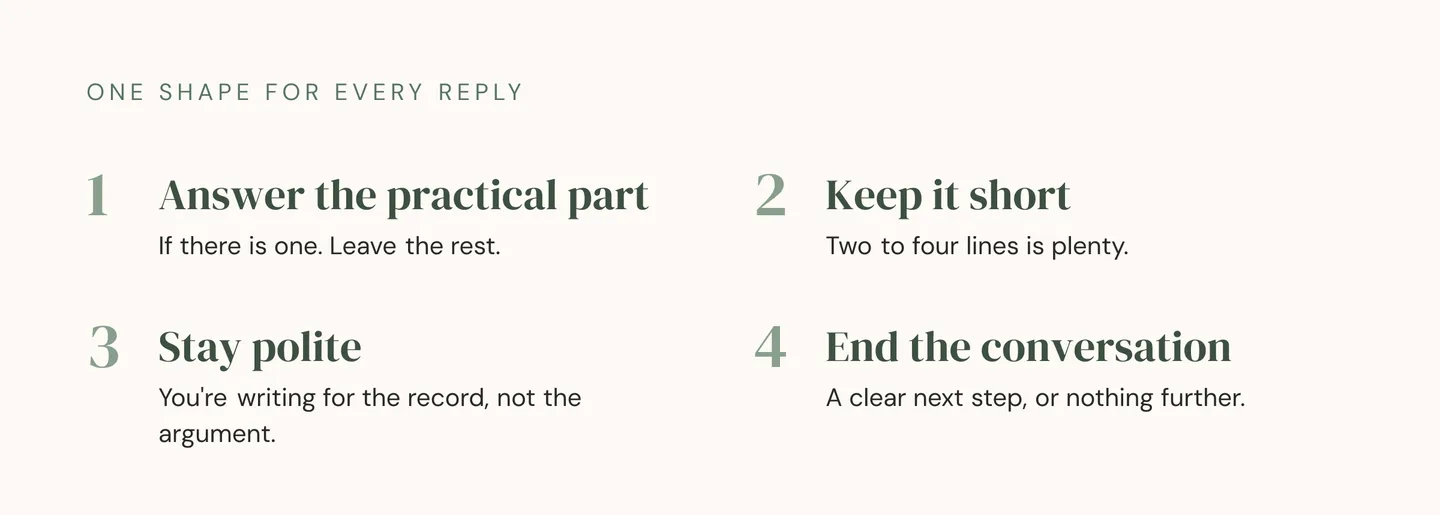
A simple structure many counselors teach is the BIFF Response®, developed by Bill Eddy at the High Conflict Institute: brief, informative, friendly, firm. In practice that means:
- Answer the practical part, if there is one. Ignore the rest.
- Keep it short. Two to four lines is plenty.
- Stay polite, even when they aren't. You're writing for the record, not the argument.
- End the conversation. A clear next step, or nothing further.
If a message doesn't need a reply at all, it's fine not to send one.
In Clarity Witness: before you send, run a tone check. It shows how your reply might come across, and it's often enough to catch the line you'd regret.
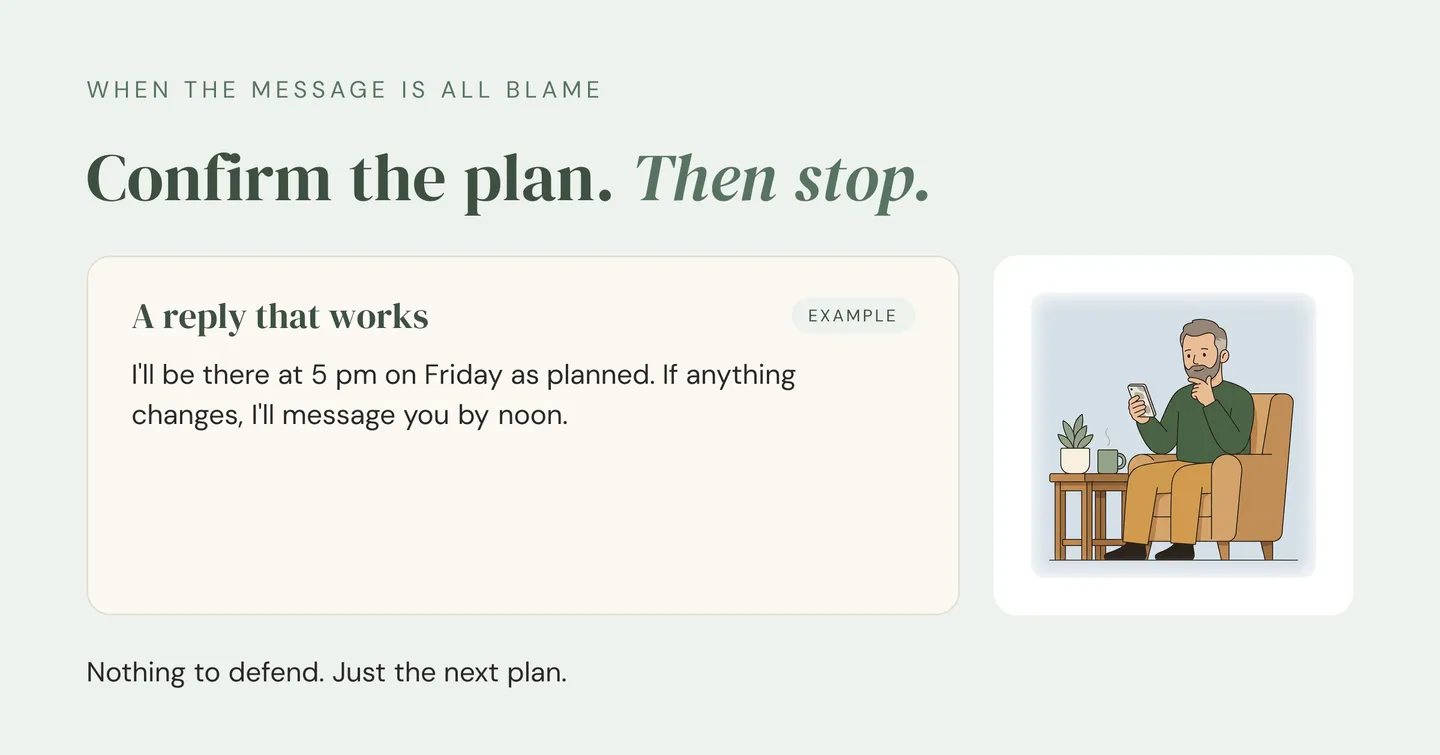
When the message is all blame
They send: You're always late. The kids are sick of it and so am I. Typical.
There's no question here, so there's nothing to defend. Confirm the next plan and stop.
When it's an insult about your parenting
They send: You let them stay up until midnight and eat junk all weekend. You're a joke of a parent.
One plain fact, then an offer to talk about the kids. You don't need to answer the insult.
When they threaten your time with the kids
They send: Keep this up and you won't be seeing them at Christmas.
State what the plan says and what you'll do. Don't argue about whether they can change it. If time is actually withheld, write down what happened on the day, and talk to your attorney or mediator.
When they demand an answer right now
They send: I need an answer about the dentist in the next hour or I'm booking it myself.
If you can answer quickly and it's a fair request, do. If you can't, say when you will: "I'll check my work schedule and reply by 6 pm." A deadline someone else sets isn't an emergency unless it's about the kids' health or welfare.
When the messages keep coming late at night
They send: Six messages between 11 pm and 1 am about something that happened last summer.
You don't have to answer at midnight, and you don't have to answer every message. One steady line sets a pattern you can keep to.
When they bring a new partner into it
They send: Your new boyfriend has no business being at pickups. The kids don't even like him.
Keep it about the handovers and the kids. Whether you agree with the point or not, a short, polite reply takes the heat out of it.
When they send messages through the kids
The kids say: Dad says you have to pay for the trip or we can't go.
Don't reply through the kids. Tell them it's a grown-up thing you'll sort out, then message the other parent directly:
When a message frightens you
Some messages aren't just unkind. If a message threatens you or the kids, or says someone is coming to your home, don't reply to it. Keep it, and talk to someone who can help with what to do next.
Before you press send
- Would this read fine to a mediator, a judge, or your kids when they're grown?
- Have you answered the practical part, and only that?
- Have you left out sarcasm, history and other people's opinions?
- Is there a clear next step, or a clear end?
In Clarity Witness: once a message is sent it can't be edited or deleted, by either of you, and each one is timestamped. That keeps the record straight, and it's a good reason to write every reply as if someone else will read it one day.
When it keeps happening
One hostile text is a bad day. A run of them is a pattern, and it's worth seeing clearly: the same accusation every week, a flood before each handover, threats that come back every holiday.
In Clarity Witness: Witness reads your messages and points out what keeps happening, with the dates behind it. When you need to share it, a briefing gives your attorney or mediator a clear summary instead of a folder of screenshots.
Questions parents ask
Should I defend myself when something isn't true? Usually one plain line is enough: "I don't agree with that, but let's focus on Friday." Then move on. Long defenses tend to start long arguments.
Is it rude not to reply? No. Reply to anything about the kids, plans or money. Blame and opinion don't need an answer.
What if they say I never replied? In the Clarity Witness chat, each message shows when it was sent and when it was read.
Can I use these examples word for word? Yes, if they fit. Change the details so they're true for your family, and keep them short.