

How to answer a hard message (without making it worse)
In this guide
Some messages land like a punch. Long, heated, full of things that aren't true - and they always seem to arrive at 10 pm.
It's natural to want to answer every line. Most of the time that just makes the next message longer. This guide is a simple way to reply that keeps things about the kids, keeps your record clear, and gets you back to your evening.
First, don't reply straight away
Unless it's about the kids' plans in the next few hours, a hard message can wait. Give it an hour, or sleep on it if you can.
Read it once, then put the phone down. Rereading it five times doesn't change what it says - it just keeps it going in your head.
If one part needs a quick answer (a pickup time, say), answer just that part now and leave the rest for later.
In Clarity Witness: every message is timestamped when it's sent, so there's no rush to screenshot it or save it somewhere else. It's already in the record, in order.
Find the one thing that needs an answer
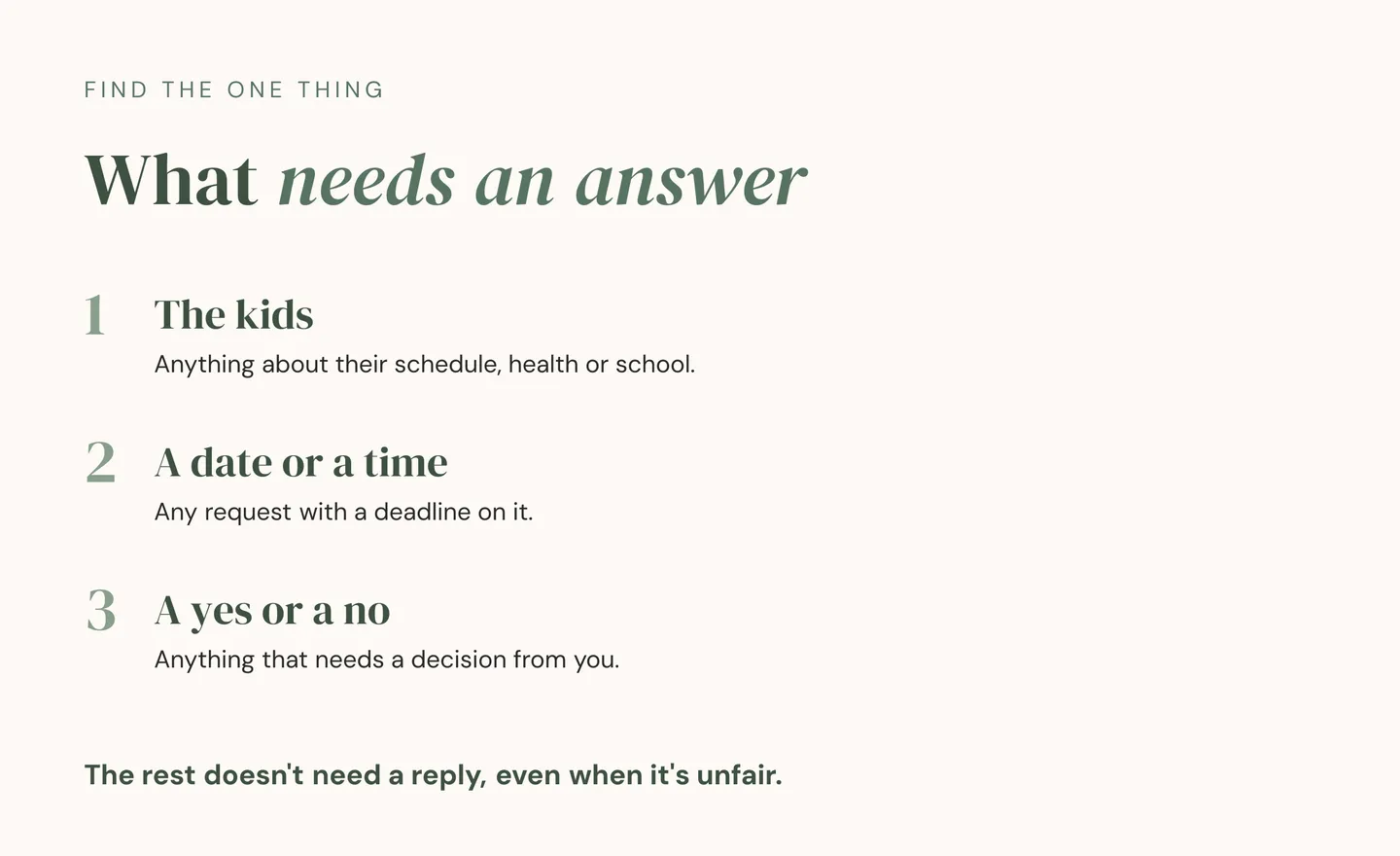
Most hard messages have one real question buried in them. Everything else is opinion, history or blame.
Go through it and pick out:
- Anything about the kids' schedule, health or school
- Any request with a date or time on it
- Anything that needs a yes, a no or a "let me check"
That's what you answer. The rest doesn't need a reply, even when it's unfair.
In Clarity Witness: Witness reads your messages and points out patterns with dates - like a run of weekend switch requests - so you don't have to keep a list in your head.
Write short, plain and about the kids
A good reply is usually three or four lines. It says what you're agreeing to, what you're not, and what happens next.
A few things that help:
- Use their name, or no greeting at all. Skip sarcasm.
- Answer the question, then stop.
- Don't explain your feelings or defend your character. You don't need to win the message.
- Offer a clear next step: a time, a date, or "I'll confirm by Thursday".
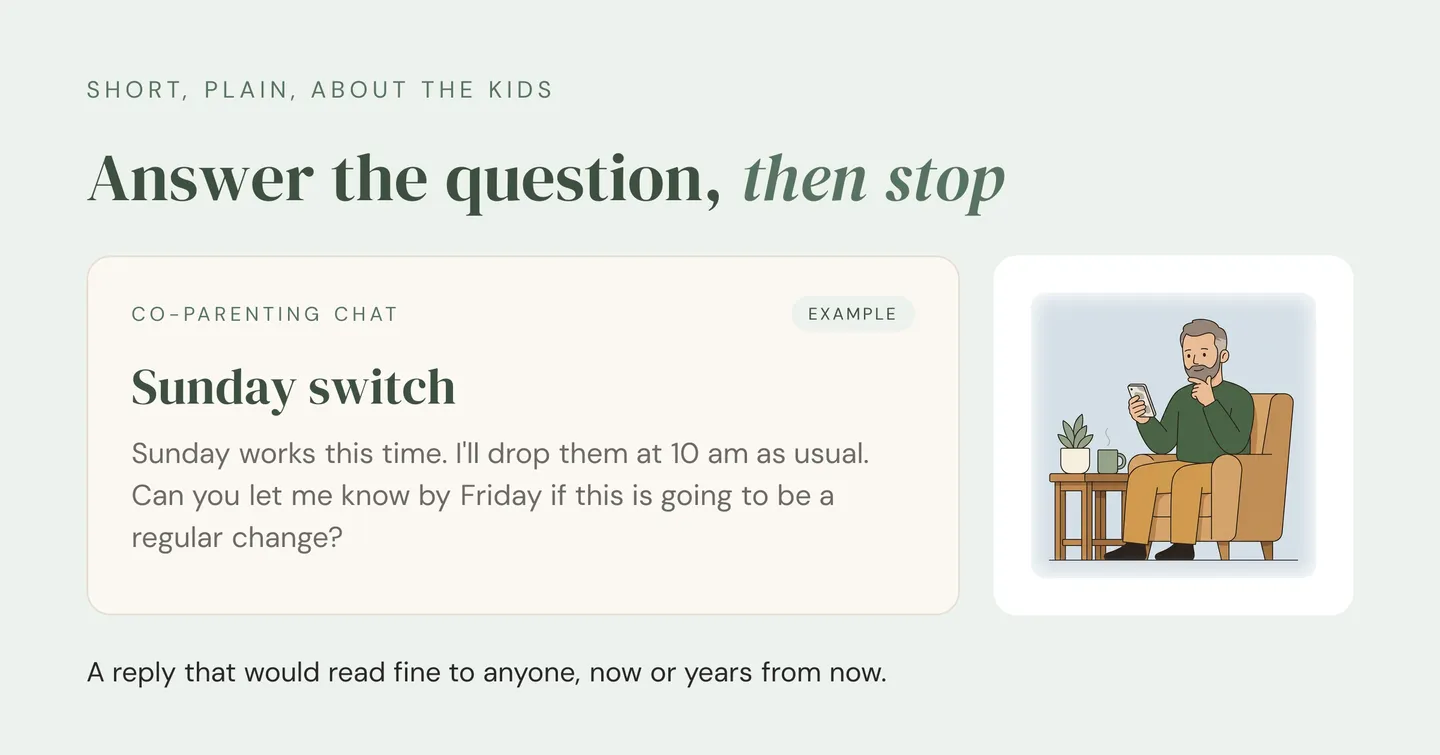
That reply would read fine to anyone - a mediator, an attorney, or your kids when they're grown up. It's a good test for any message.
In Clarity Witness: the Tone check runs before you send, when you choose to use it. It's a second pair of eyes at 10 pm, when it's hardest to be at your best.
What to leave out
It's tempting to correct every unfair thing. A few things almost never help:
- Going back over old arguments
- Bringing in what friends, family or new partners think
- Comments about the other parent's character
- Passing messages through the kids
If something said about you is untrue and it matters, one plain line is enough: "I don't agree with that, but let's focus on the weekend." Then move on.
In Clarity Witness: a sent message can never be edited, deleted or hidden, by either parent. That cuts both ways, so it's worth writing every reply as if someone else will read it one day.
When it keeps happening
One bad message is a bad day. A run of them is a pattern, and patterns are worth seeing clearly.
You might notice the hard messages arrive on the same day each week, or before each handover, or after a certain kind of request. Seeing that can help you plan - answering on a set day, say, or moving schedule talk into one weekly message.
If you're working with an attorney or mediator, they'll usually want the facts in order: dates, what was asked and what you answered.
In Clarity Witness: Witness links each pattern to the messages behind it, so you can see what's really going on. When you need to share it, a briefing gives your attorney or mediator a clear summary, and the chat PDF shows sent times and who read each message and when.
Make the next message easier
A lot of hard messages start with something small: a plan nobody wrote down, a cost nobody agreed, a pickup time that drifted. Taking those off the table means fewer messages to answer at all.
A few things that help:
- Put the schedule somewhere you can both see it, so dates aren't up for debate.
- Agree a reply window for anything that isn't urgent - within 24 hours, say.
- Keep money in its own place, with the receipt, rather than in the middle of a long message.
In Clarity Witness: the schedule, expenses and documents sit alongside your chat, all in one app. Shared costs carry their receipts (Insight and Pro), so there's less to argue about in the messages themselves.
When a message worries you
Some messages aren't just unfair - they're frightening. If a message threatens you or the kids, or says someone is coming to your home, treat it differently. Don't reply to it, keep it, and talk to someone who can help with next steps.
In Clarity Witness: messages stay in the record, timestamped. You don't have to forward them anywhere to keep them.
Look after yourself
Hard messages take more out of you than they look like they should. A few small things help:
- Mute notifications from the chat in the evening, and check at a set time.
- Have someone you trust you can read a message to before you reply.
- Remember your reply doesn't have to fix everything. It just has to be clear.
Questions parents ask
Should I reply to every message? No. Reply to anything about the kids, plans or money. Opinion and blame don't need an answer.
What if they say I never replied? In Clarity Witness, the app shows Sent or Read on each message, and the chat PDF shows who read each one and when.
Can I take back a message I regret? Not in Clarity Witness - sent messages can't be edited or deleted. If you got something wrong, a short follow-up is best: "I was frustrated earlier. Here's what I meant."
Can Witness tell me what to say? No. Witness shows you patterns and the moments behind them. It doesn't give advice or judge anyone. The Tone check helps with how a message reads before you send it.
Will the people I share with see everything? Only what you choose to share. Private conversation content never goes into reports or anything shared unless you include it.