

When the other parent won't reply: keeping things moving when messages go unanswered
In this guide
- What it often looks like
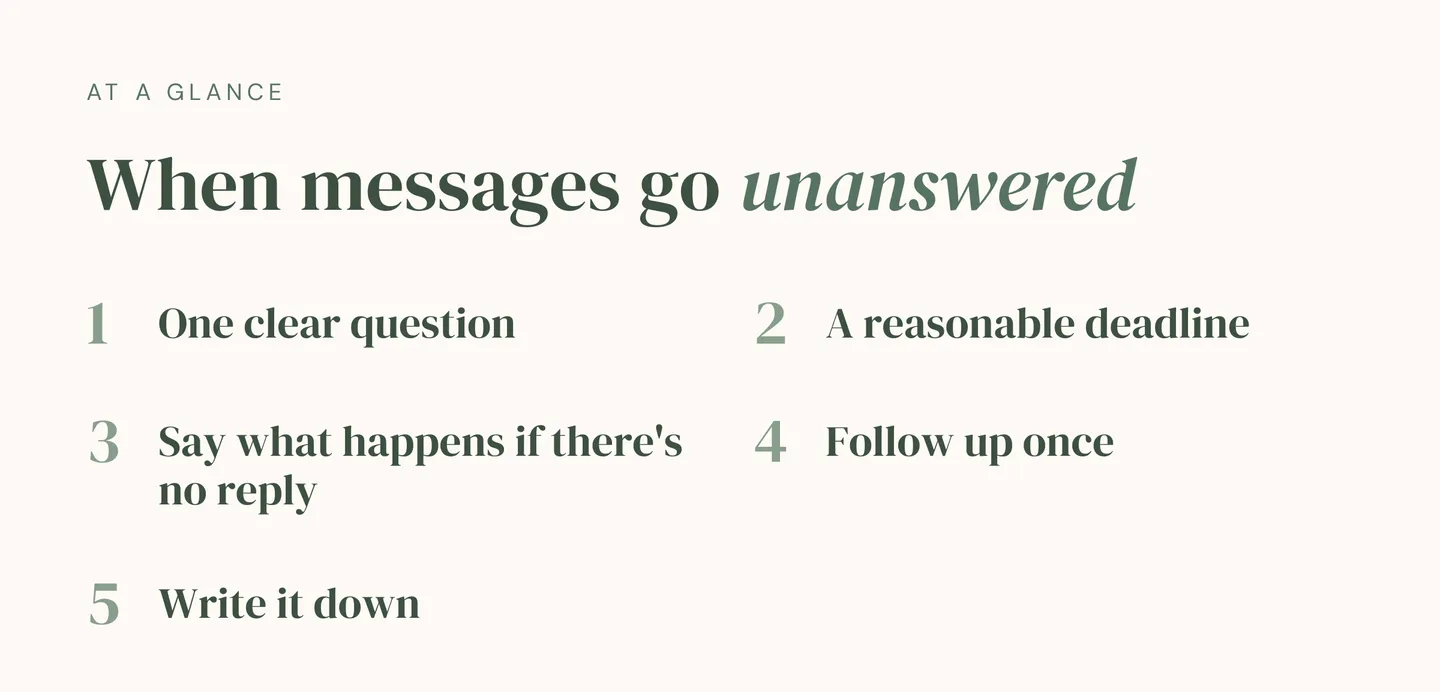
- 1. Ask one clear question per message
- 2. Give a reasonable deadline
- 3. Say what happens if you don't hear back
- 4. Follow up once, then stop
- 5. When it's urgent, use the agreed route
- 6. Keep a record of what goes unanswered
- 7. Don't fill the silence with guesses
- 8. When decisions keep stalling
- Look after yourself
- Questions parents ask
- Try Clarity Witness
You send a question about Friday's pickup. Nothing. You follow up the next day. Still nothing. Then, an hour before the handover, a reply that changes the plan - or no reply at all.
Silence can be as hard to deal with as an argument. It leaves you guessing, it holds up decisions about the kids, and if you push too hard, you can end up looking like the unreasonable one. This guide covers how to keep things moving anyway, what to write, what to do when it's urgent, and how Clarity Witness helps you show what's really going on.
What it often looks like
Every situation is different, but many parents describe the same things:
- Questions about pickups, school or health left unanswered for days
- Messages read, but never replied to
- Replies that only arrive at the last minute
- One-word answers that don't answer the question
- Silence after a disagreement, sometimes for weeks
- Plans going ahead without you, because you never said no
Not every silence is deliberate. People get busy, phones get lost, and some parents find any contact with the other home stressful. Whatever the reason, the steps below work the same way, and none of them depend on the other parent changing.
1. Ask one clear question per message
A long message with five questions in it is easy to skim and easy to leave. One short message with one question is much harder to ignore, and much easier to show later.
If you need answers to several things, send them as separate, short messages, or number them so it's obvious which ones were answered.
In Clarity Witness: the co-parenting chat shows when each message was sent and when it was read. So you don't have to ask whether they got your message: you can see it.
2. Give a reasonable deadline
A deadline isn't a demand. It just tells the other parent when you need to know, so you can plan. Make it fair for the question: a day or two for a weekend plan, longer for something like a school trip or a summer schedule.
Avoid deadlines that land in the middle of the night or an hour from now, unless it really is urgent.
3. Say what happens if you don't hear back
This is the step that takes the power out of silence. If you say what you'll do when there's no reply, the plan still moves forward.
Choose a default that follows your parenting plan, or is clearly reasonable for the kids. A default that quietly gives you extra time or skips the other parent's time will read badly later.
4. Follow up once, then stop
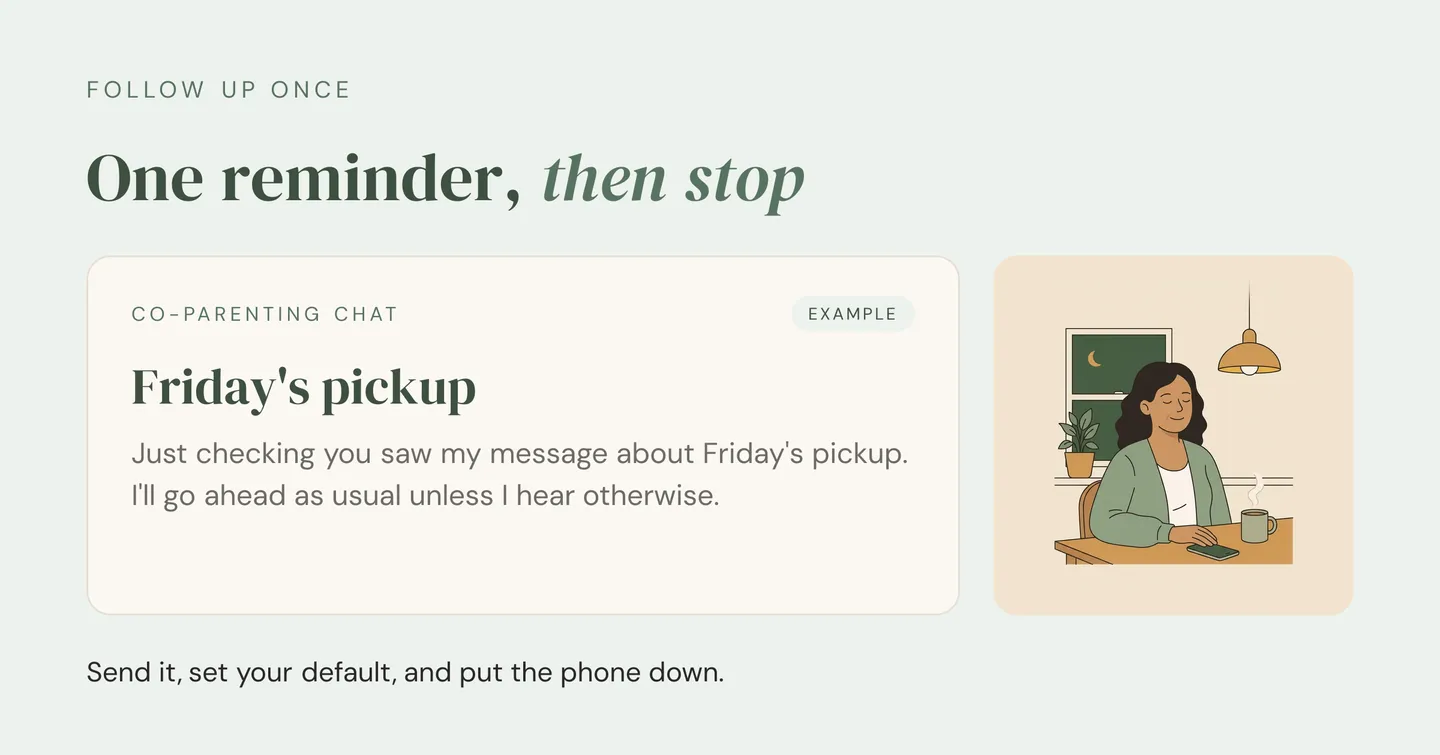
If the deadline passes, send one short, polite reminder. Then stop. A string of follow-ups asking whether they've seen it, or why they're ignoring you, doesn't get an answer any faster, and it turns your record from steady to frustrated.
5. When it's urgent, use the agreed route
Some things can't wait for a reply: a child who's sick at school, an injury, a change that affects tonight. Agree in advance how you'll reach each other for genuine emergencies - usually a phone call, then a text.
If you can't reach them, do what the kids need, then send a short message straight away saying what happened and what you did. Write it down too.
In Clarity Witness: log what happened on your timeline as soon as you can. It's dated for you, and it's linked to the people involved, so it's easy to find later.
6. Keep a record of what goes unanswered
One missed reply is life. A pattern of them can affect the kids - missed appointments, plans that fall through, decisions that never get made. That's worth seeing clearly.
For each question that goes unanswered, note:
- The date you asked
- What you asked, and the deadline you gave
- Whether you followed up
- What happened in the end
Saying they never answer is easy to dispute. Seven questions about school pickups since September, two answered before the deadline, is not.
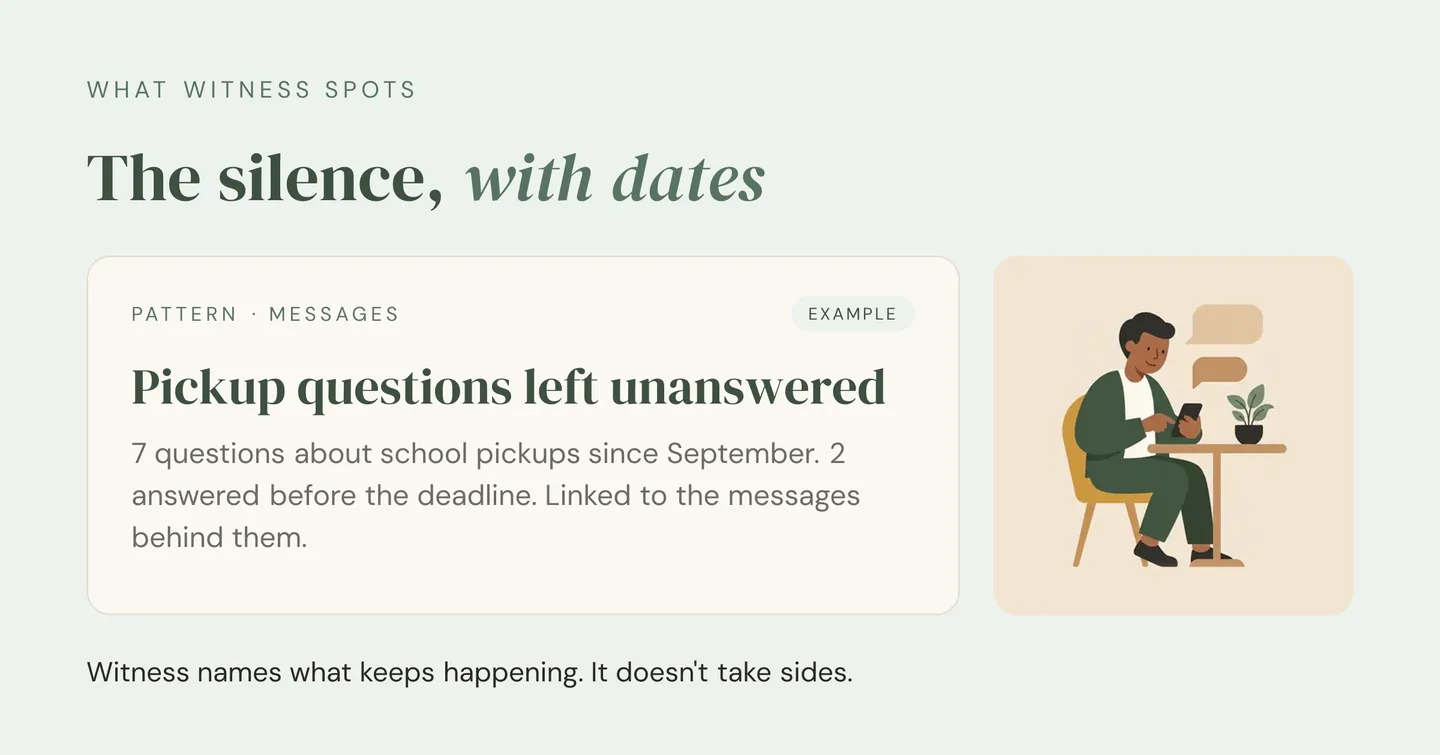
In Clarity Witness: you don't have to count it up yourself. Witness reads your messages and entries together and points out what keeps happening, with the dates behind it.
7. Don't fill the silence with guesses
Silence invites you to fill in the reasons. It's natural, but try to keep those guesses out of your messages and out of your notes. Write what happened - the question, the date, the lack of reply - not what you think it means.
And keep the kids out of it. Don't ask them to pass on a message, check whether the other parent saw something, or explain why plans changed.
8. When decisions keep stalling
Some decisions need both parents: a new school, a medical treatment, a summer camp. If those keep stalling because of silence, it's worth getting help rather than arguing it out by text.
Options to ask about include:
- A rule in your parenting plan for what happens when one parent doesn't reply by a set time
- A parenting coordinator or mediator who can help with stuck decisions
- Your attorney, if the silence is affecting the kids' health, schooling or time with you
A clear, dated record makes every one of those conversations shorter.
In Clarity Witness: briefings turn your record into a clear, dated summary you can share with your attorney or mediator, instead of a folder of screenshots.
Look after yourself
Being ignored is draining, especially when it's about your kids. Try not to check your phone every five minutes for a reply that may not come. Send your message, set your default, and get on with your day. You've done your part.
Questions parents ask
Should I keep messaging until they reply? No. One clear message, one follow-up, then go ahead with what you said you'd do. More messages rarely help and often hurt.
What if they say they never got my message? In the Clarity Witness chat, each message shows when it was sent and when it was read.
Can I go ahead without their answer? For everyday decisions during your own time, usually yes. For bigger decisions that need both parents, check what your parenting plan or order says, and ask your attorney if you're unsure.
What if they only reply at the last minute with a change? Reply briefly, stick to the plan where you can, and write it down. Our guide on replying when plans change at the last minute has examples you can adapt.
Try Clarity Witness
Clarity Witness keeps every message in one place: a co-parenting chat where messages are timestamped, can't be edited or deleted, and show when they were read, a private record of what happens, and Witness to spot the patterns for you.
Witness is included with the Insight and Pro plans. claritywitness.com
General information, not legal advice. If silence is affecting your children or your parenting time, talk to a family law attorney in your state.
A new guide, every two weeks.
Get the next guide, a pattern worth knowing and what's new in Clarity Witness. One short email, every other week.
Keep it all in one place
Logging comes with the Free plan today: your timeline, the people involved, and a personal record you can download. Witness reads it all when Insight opens.