

Parallel parenting: what it is and how to make it work
In this guide
Co-parenting advice often assumes two parents who can talk things through. When every conversation turns into an argument, that advice can feel impossible. Parallel parenting is a different approach: each parent runs their own home, contact between the adults is kept to the essentials, and the kids still get to have both parents in their lives.
This guide explains what parallel parenting is, how it differs from co-parenting, when it helps, and how to set it up so it actually works.
What parallel parenting is
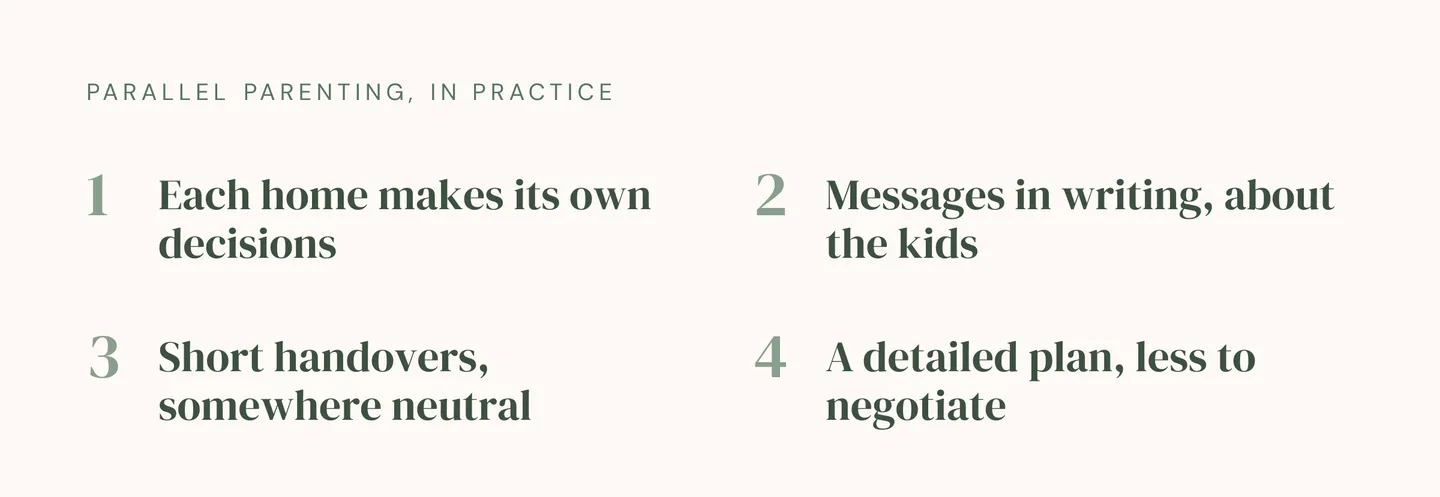
In cooperative co-parenting, parents talk often, make decisions together and are flexible with each other. In parallel parenting, parents step back from each other instead:
- Each parent makes the day-to-day decisions during their own time
- Contact between the parents is mostly in writing, short and about the kids
- Handovers are quick, and often happen somewhere neutral, like school
- The parenting plan is detailed, so there's less to negotiate
It isn't about cutting anyone off. The kids still spend time with both parents. The aim is to take the kids out of the conflict by giving the adults fewer chances to argue.
Parallel parenting vs co-parenting
The two aren't opposites. They sit on a scale, and many families move along it over time.
- Co-parenting: parents talk often, decide things together and swap days when life gets in the way. It works best when both parents can disagree without it turning into a fight.
- Parallel parenting: parents talk less, mostly in writing, and each home handles its own day-to-day. It works best when contact itself keeps causing conflict.
Some families mix the two. They decide school and medical matters together, and keep everything else parallel. Choose what keeps the kids out of the middle right now. You can change it later.
When it helps
Parallel parenting is often suggested by counselors, mediators and family courts when:
- Most conversations between the parents end in an argument
- Handovers are tense, or the kids are often caught in the middle
- One parent feels worn down by constant messages, criticism or changes
- Cooperation has been tried, and hasn't worked yet
For many families it's a stage, not forever. When things settle down, some parents move back toward more cooperation. Others find the structure suits them and keep it.
Start with a detailed plan
The less there is to decide, the less there is to argue about. A good parallel parenting plan spells out:
- The regular schedule, with exact days and times
- Where each handover happens, and who does it
- Holidays, birthdays and school breaks, year by year
- Who decides what: school, medical, activities, and how the other parent is told
- How costs are shared, and how to ask for a share
- How you'll communicate, and how quickly a reply is expected
- What counts as an emergency, and how to reach each other in one
If your current plan is vague, talk to your attorney or mediator about whether it can be made more specific.
In Clarity Witness: put the schedule in Clarity Witness and send handover times to the other parent to accept, so you're both working from the same dates without a conversation about them.
One channel, short messages
Pick one place for messages between you, and keep to it. Texts, emails, voicemails and notes in a school bag make it easy to miss things and hard to keep track.
Keep every message short, practical and polite. Think of it like writing to a colleague you don't know well.
Agree a reply window for anything that isn't urgent, like 24 or 48 hours. That way neither of you is waiting by the phone.
In Clarity Witness: the co-parenting chat is built for this. Every message is timestamped, it can't be edited or deleted once it's sent, and you can see when it's been read. A tone check helps keep your messages businesslike.
Keep handovers short and neutral
Handovers are where tension often spills over in front of the kids. Make them as uneventful as possible:
- Use school or daycare where you can, so the parents don't meet at all
- Otherwise, pick a neutral public place and a fixed time
- Keep it to a quick hello and goodbye. Talk about anything else in writing later
- Pack the kids' things ahead of time, so nothing needs sorting out at the door
Share information, not opinions
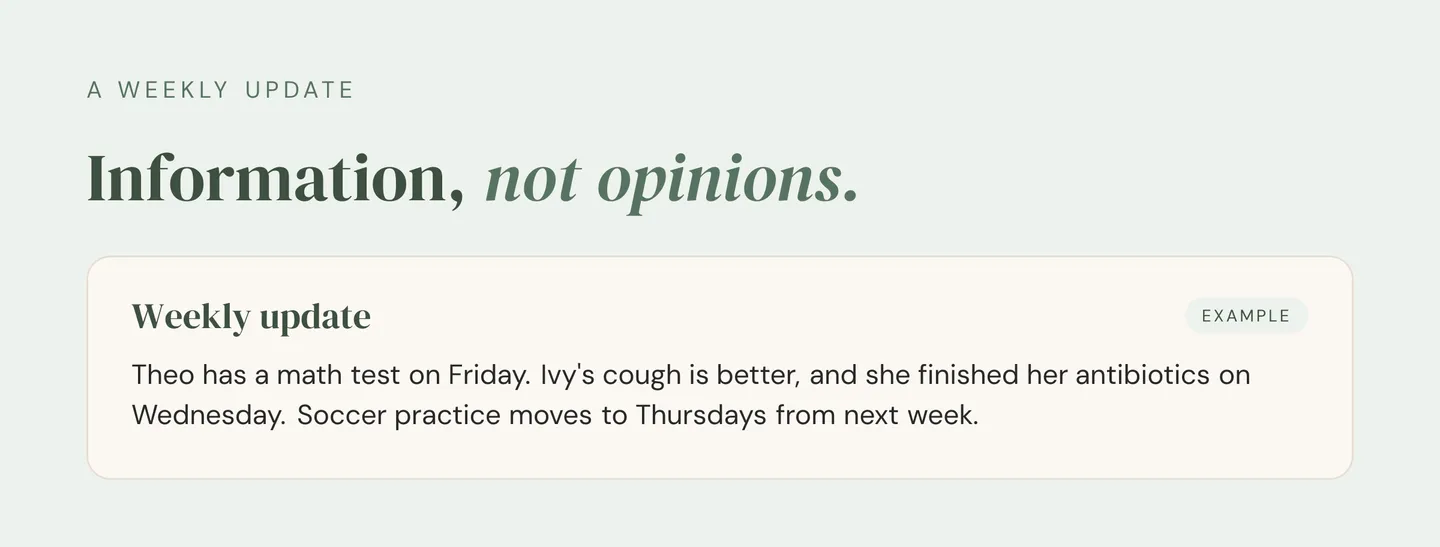
Even when you don't talk much, the kids do better when both homes know what's going on. A short weekly update covers most of it:
Stick to school, health, activities and anything coming up. Leave out how things are going in your own life, and what you think of the other home.
Let each home be different
In parallel parenting, you don't have to agree on bedtimes, screen time or what's for dinner. Kids adapt to different rules in different places, like school and grandparents' houses. What they need is for neither parent to criticize the other home in front of them.
If something at the other home genuinely worries you, raise it once, in writing, with facts. If it's serious, talk to a professional.
Keep a record as you go
Parallel parenting works best when things stay predictable. A short note on the day helps you see whether the plan is being followed, and what keeps going wrong if it isn't.
In Clarity Witness: write a few lines on your Today page after each handover. Entries are dated for you and private. Witness reads your record and points out what keeps happening, so you can bring a clear picture to your attorney or mediator if the plan needs changing.
Questions parents ask
Is parallel parenting the same as no contact? No. Parents still share information about the kids and follow the same plan. The contact is just limited, written, and about the kids.
Do we need a court order to parallel parent? Not always. Some parents agree to it themselves. Others ask for a detailed plan through mediation or the court. An attorney can tell you what makes sense where you live.
What if the other parent won't follow the plan? Keep following it yourself, keep your messages short, and write down what happens each time. If it keeps happening, talk to your attorney or mediator.
Will it hurt the kids that we don't talk? What hurts kids most is conflict they can see. Predictable handovers and two homes that don't criticize each other usually help them more than forced conversations between parents.