

Keeping the kids out of the middle
In this guide
- What "the middle" looks like
- 1. Keep every message between the adults
- 2. No errands between homes
- 3. Don't ask them to report back
- 4. Keep adult conversations out of earshot
- 5. Let them love the other parent
- 6. When they repeat something hurtful
- 7. When the other parent puts them in the middle
- 8. Bring in the professionals when you need to
- Look after yourself
- Questions parents ask
- Try Clarity Witness
Most parents know they shouldn't put the kids in the middle. It still happens all the time, usually in small ways nobody planned: a quick "tell your dad he's late again", a child sent to the door to fetch something, a question about the other home asked a bit too casually.
Kids notice all of it. When they're carrying messages, running errands between homes or feeling they have to pick a side, they end up responsible for things that should sit with the adults.
This guide covers what "the middle" looks like, how to keep your kids out of it, what to do when the other parent puts them there, and how Clarity Witness helps.
What "the middle" looks like
It's not always obvious. Many parents describe things like:
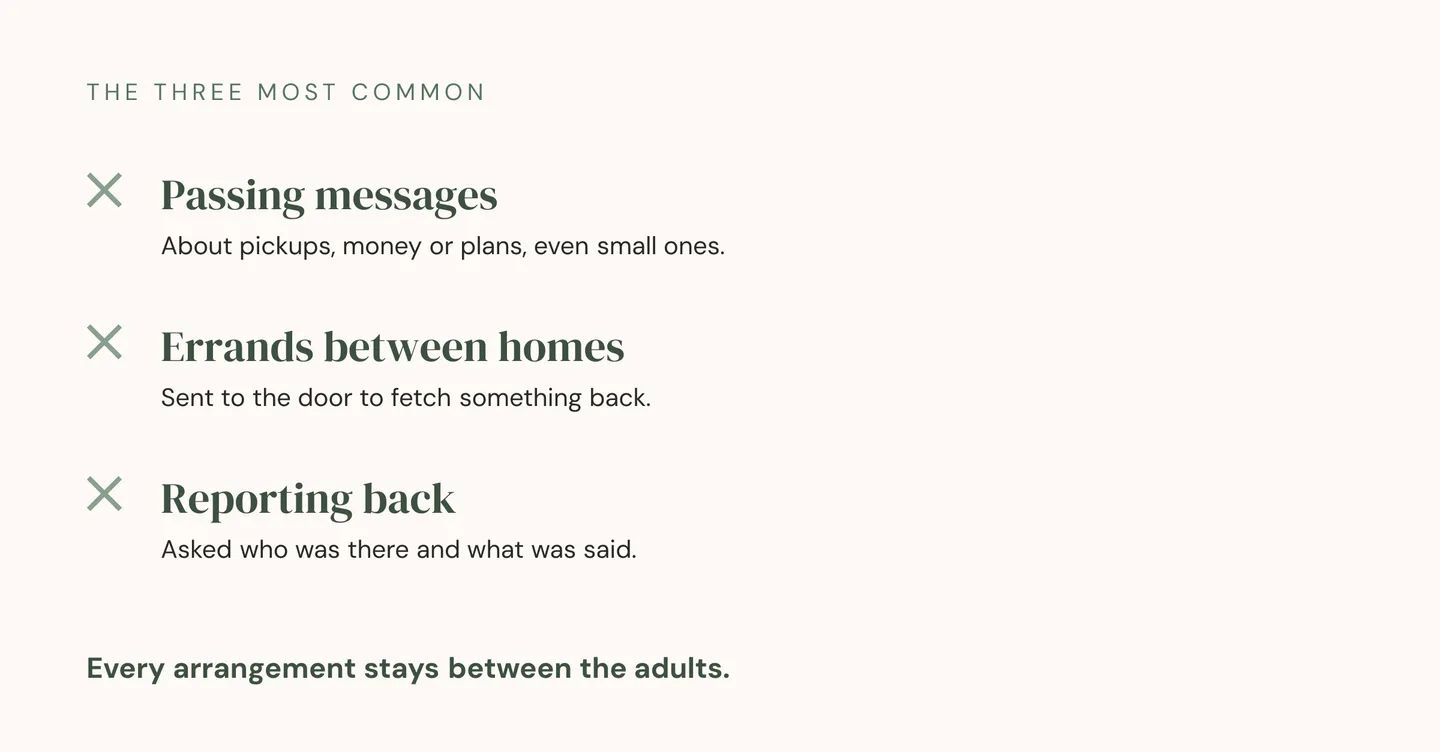
- Kids passing on messages about pickups, money or plans
- Kids being sent to collect belongings from the other home
- Questions about what happens at the other house, who was there and what was said
- Arguments or tense phone calls the kids can hear
- Criticism of the other parent, said directly or within earshot
- Kids feeling guilty for enjoying time at the other home
None of these need to be dramatic to matter. It's the repetition that wears kids down.
1. Keep every message between the adults
Anything about schedules, money, school or health goes directly from parent to parent, in writing. Even the small stuff. "Can you tell your mom I'll be ten minutes late?" seems harmless, but it puts your child in charge of delivering news that might not land well.
In Clarity Witness: a co-parenting chat is coming soon, with the Chat plan. Every message will be timestamped and can't be edited or deleted once it's sent, so there's one clear version of what was agreed. For now, note each arrangement on your timeline the day it's made.
2. No errands between homes
If something needs to come back - a jacket, a school book, a game console, a family keepsake - ask the other parent for it in writing. Don't send the kids in to get it, and don't ask them to remember to bring it next time.
If belongings keep going missing, write down each request and the date. It's a common source of friction, and a list of dates is much easier to deal with than a vague "it never comes back".
In Clarity Witness: log each request on your timeline the day you make it. When Insight opens, Witness will show the pattern, for example "asked for the school bag 6 times since September" (an example).
3. Don't ask them to report back
It's natural to want to know how things are going at the other home. But questions like "Was her boyfriend there?" or "What did your dad say about me?" make kids feel like informants. Most will pick up on what you're really asking, even if you keep it light.
If your kids want to tell you about their time away, listen and let them lead. "Sounds like you had a fun weekend" is enough.
4. Keep adult conversations out of earshot
Handovers, phone calls and video calls are where kids overhear the most. Keep handovers short and friendly. If a conversation needs to happen, have it later, in writing, or on a call when the kids are asleep or out.
In Clarity Witness: when the chat opens (coming soon, with the Chat plan), you can move things there instead of the doorstep, and run a tone check to see how a reply might come across before you send it.
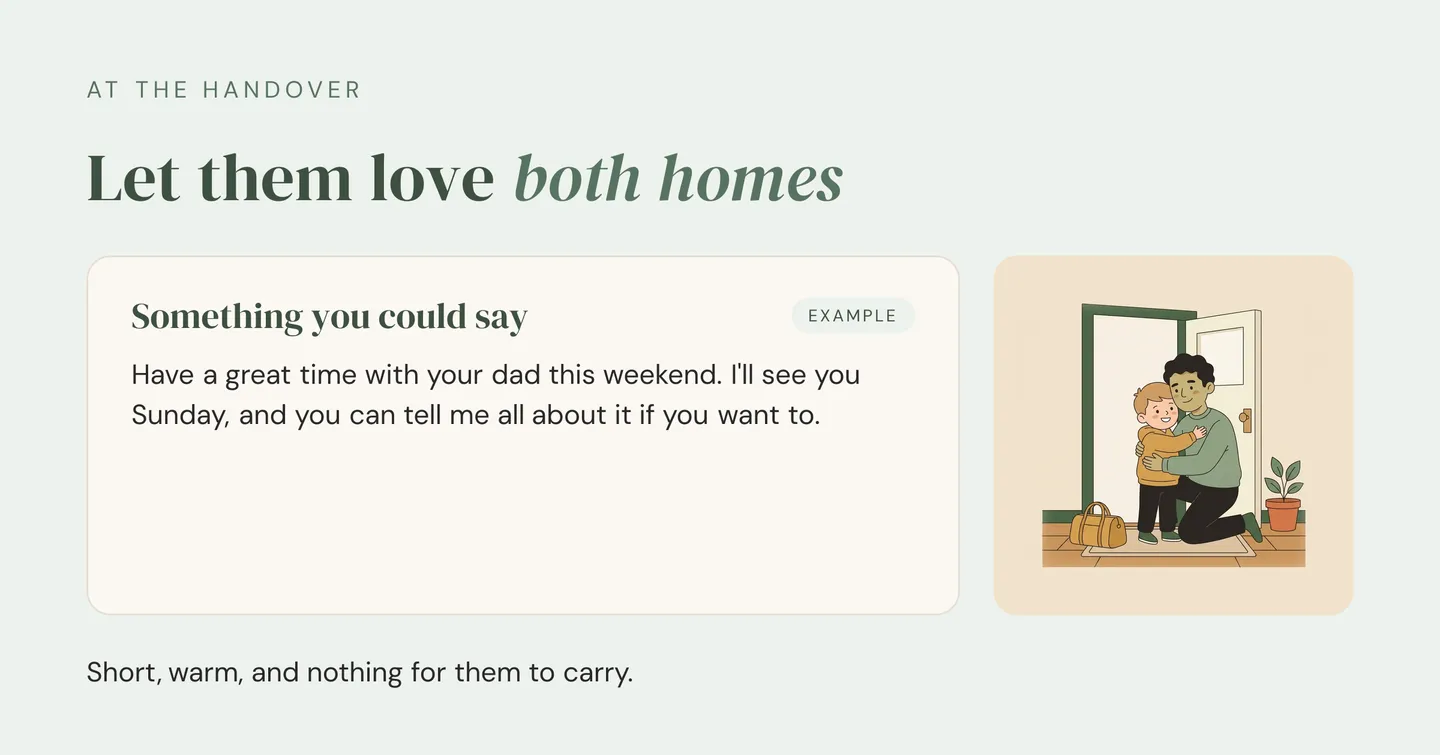
5. Let them love the other parent
Kids do best when they're free to love both parents, even when the adults don't get along. Small things help a lot:
- A photo of the other parent in their room at your house
- Helping them make or buy a birthday card for the other parent
- Calls or video chats at the agreed times, without you listening in
- Saying "Have a great time" at handovers and meaning it
6. When they repeat something hurtful
Sometimes kids come home and repeat something the other parent said about you. It can be hard not to react. Try to stay neutral and take the weight off them:
Then, if it matters, write it down that day in your child's own words. Don't ask follow-up questions to get more detail.
7. When the other parent puts them in the middle
You can't control what happens at the other home. What you can do is not respond through the kids, take the issue up with the other parent directly, and keep a factual record.
In Clarity Witness: log each time the kids are put in the middle, with the date and what was said. If it keeps happening, your timeline shows the dates, and when Insight opens, Witness will point out the pattern, so you can raise it with the people helping your family with something more than "it happens a lot".
8. Bring in the professionals when you need to
If you're worried about how the kids are coping, a family counselor or their school counselor is a good place to start. If there's a guardian ad litem, mediator or attorney involved, they'll want to know about a pattern of the kids being used as messengers.
In Clarity Witness: download your personal record and share the parts you choose with your counselor, attorney or guardian ad litem. Connecting them in the app, and briefings that sum it all up, are coming soon.
Look after yourself
It takes real effort to stay neutral when you feel provoked, especially if you're the only one trying. Find somewhere to put the frustration that isn't in front of the kids: a friend, a counselor, a support group, or a few lines on your timeline.
Questions parents ask
What if my kids want to tell me about the other home? Let them. Listen, keep your reactions small and positive, and don't turn it into questions. If something concerns you, write it down in their words.
Should I tell my kids the truth about why we separated? Keep it age-appropriate and free of blame. Kids need to know it isn't their fault and that both parents love them. A family counselor can help you work out what to say.
What if the other parent keeps sending messages through the kids? Answer the other parent directly, in writing, and ask for future messages to come to you. Note each time it happens.
Should I write down what my kids tell me? Yes, if it matters, in their own words and on the same day. Just don't question them to get more.