
Co-parenting through Thanksgiving and the holidays
In this guide
Thanksgiving is the first test of the holiday season, and it comes around fast. One long weekend, two homes, two sets of family, and usually a school break that doesn't quite match the parenting plan. By the time Christmas and New Year arrive, any gap in the plan has had a few chances to turn into an argument.
This guide is about the season as a whole: planning early, sharing the time in a way the kids can enjoy, handling family and traditions, and getting through the days that aren't yours. For the practical list of what to confirm and what to pack, see our holiday handover checklist.
Read your plan now, not the week before
Most holiday arguments start with two parents remembering the plan differently. Take ten minutes this week to read the holiday section of your parenting plan or order, and the school calendar beside it.
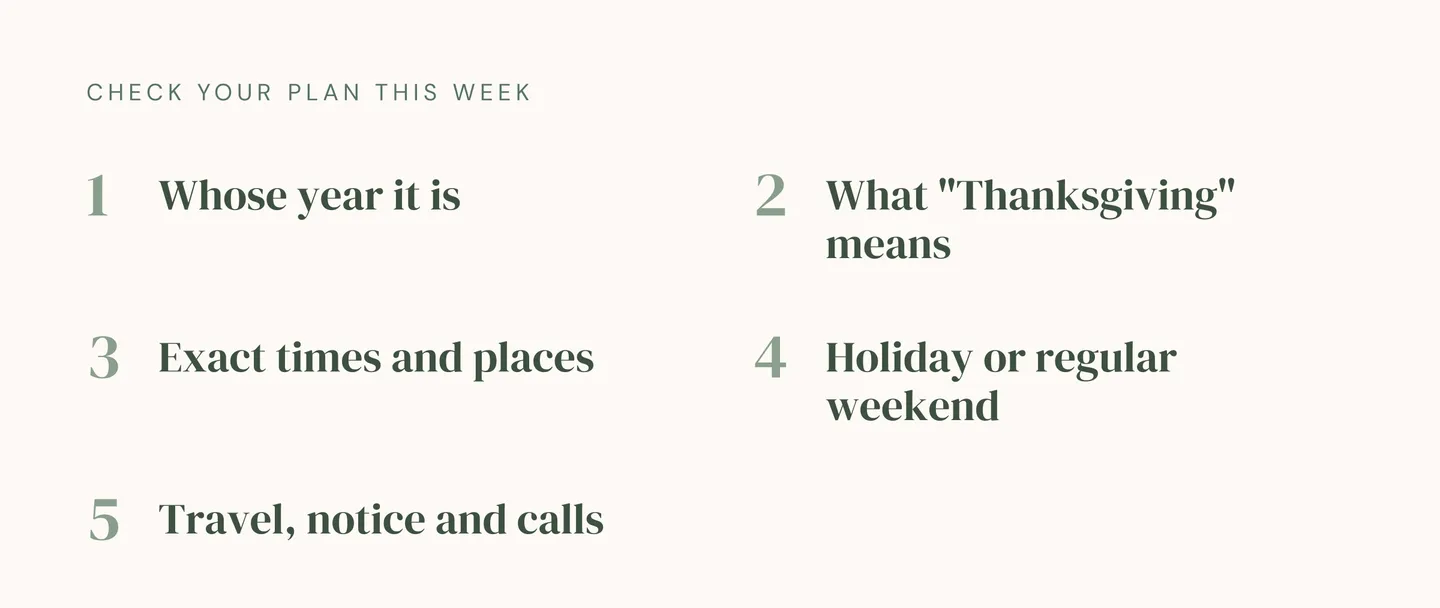
Check:
- Whose year it is for Thanksgiving, and for each of the winter holidays
- What "Thanksgiving" means in your plan: the Thursday only, Wednesday evening to Sunday, or the whole school break
- Exact start and end times, and where each handover happens
- Whether holiday time replaces the regular weekend schedule, or sits on top of it
- Anything about travel, notice, or calls with the other parent
If something is unclear, ask about it now, in one short message, while there's still time to sort it out without pressure.
In Clarity Witness: on plans with the shared schedule, add the holiday handovers and send them to the other parent to accept. Once they're accepted, you're both looking at the same dates, and the chat shows when each one was proposed and agreed.
Share the time in a way that works for the kids
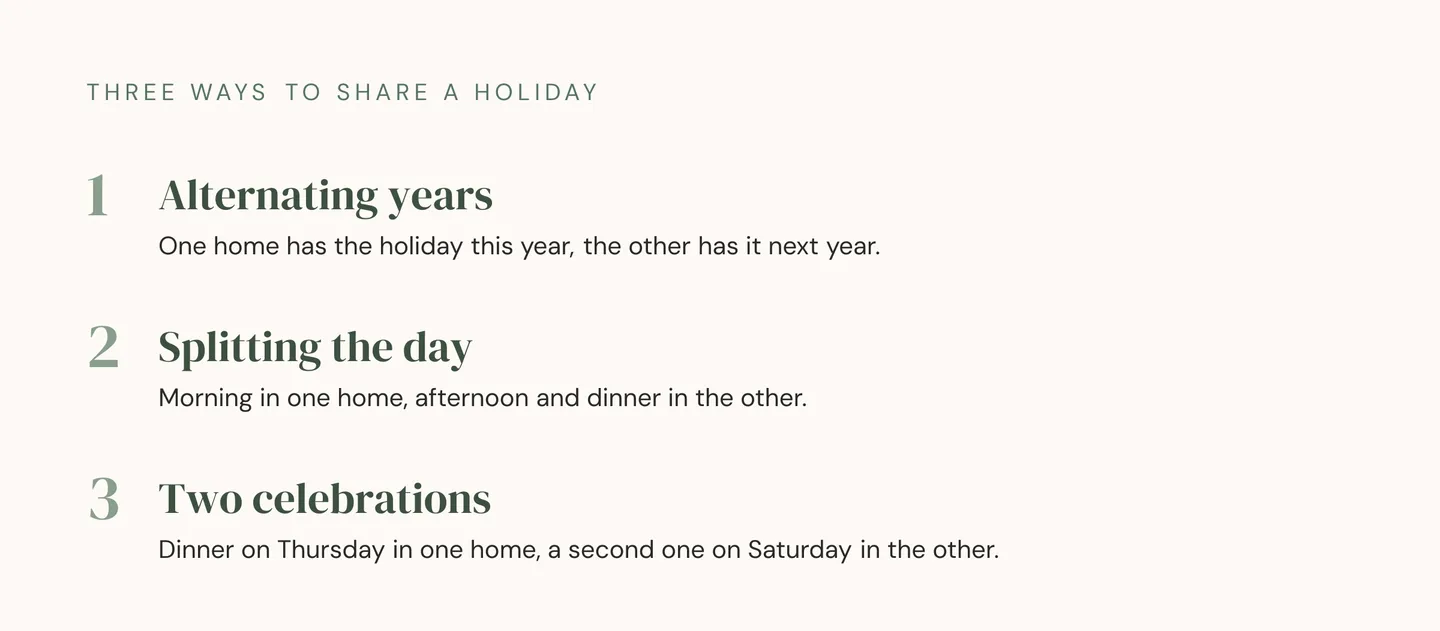
There's no single right way to divide a holiday. What matters is that the kids can enjoy it, and that both parents know what's happening. Families tend to use one of a few patterns:
- Alternating years: one parent has Thanksgiving this year, the other has it next year. Simple, and the kids get a whole holiday in one place.
- Splitting the day: morning in one home, afternoon and dinner in the other. It works best when the homes are close and handovers go smoothly.
- Two celebrations: the kids have Thanksgiving dinner on Thursday with one parent and a second one on Saturday with the other. Kids often like this more than adults expect.
Whichever you use, keep the plan the kids hear simple and settled. Tell them where they'll be and when, and let them look forward to both.
Family, traditions and new people
Grandparents, cousins and new partners all add their own hopes to the season. A little planning keeps the kids from feeling caught between them.
- Let the kids keep the traditions they love in both homes, even if they look a bit different now
- Give extended family the plan early, so nobody is surprised or upset on the day
- If there's a new partner, keep the first holiday together low-key, and don't ask the kids to choose who they're excited to see
- Agree the big gifts in advance, so the kids don't get two of the same thing
If someone in your family says unkind things about the other parent in front of the kids, step in gently and change the subject. The kids will remember the atmosphere far longer than the meal.
When plans change at the last minute
Holidays bring late changes: a flight time moves, someone gets sick, a relative arrives a day early. Reply in writing, briefly, and keep it about the kids. Either agree to the change clearly, or say plainly what the plan says and what you'll be doing.
Our guide How to reply when plans change at the last minute has more examples you can adapt.
In Clarity Witness: before you send a reply in a stressful week, run a tone check. It takes a few seconds and helps make sure the message says what you mean and nothing more.
If it's not your year
The empty house can be the hardest part of the season. Plan your own day before it arrives:
- Spend it with people you like: friends, family, or a Friendsgiving
- Get outside, or do something you never get to do when the kids are home
- Keep any calls with the kids light and short, at the time you agreed
- Don't ask them for details about the other home. Let them tell you what they want to
It's also fine to celebrate on a different day. Kids rarely mind having "our Thanksgiving" on Saturday.
Keep a few notes as you go
The holidays are when patterns show up: handovers that always run late, plans that change the night before, the same argument about the same day each year. A short note on the day makes next year easier to plan, and it's useful if your plan is ever looked at again.
- The time agreed, and the time it actually happened
- Any change, and how you heard about it
- How the kids seemed, as facts rather than guesses
In Clarity Witness: jot a few lines on your Today page after each handover. They're dated for you and private. Next November, Witness can show you what keeps happening around the holidays, with the dates behind it, so you're not relying on memory.
Questions parents ask
Our plan doesn't mention Thanksgiving. What happens? Usually the regular schedule applies. If you'd like something different, agree it in writing for this year, and note it as something to add if the plan is ever updated.
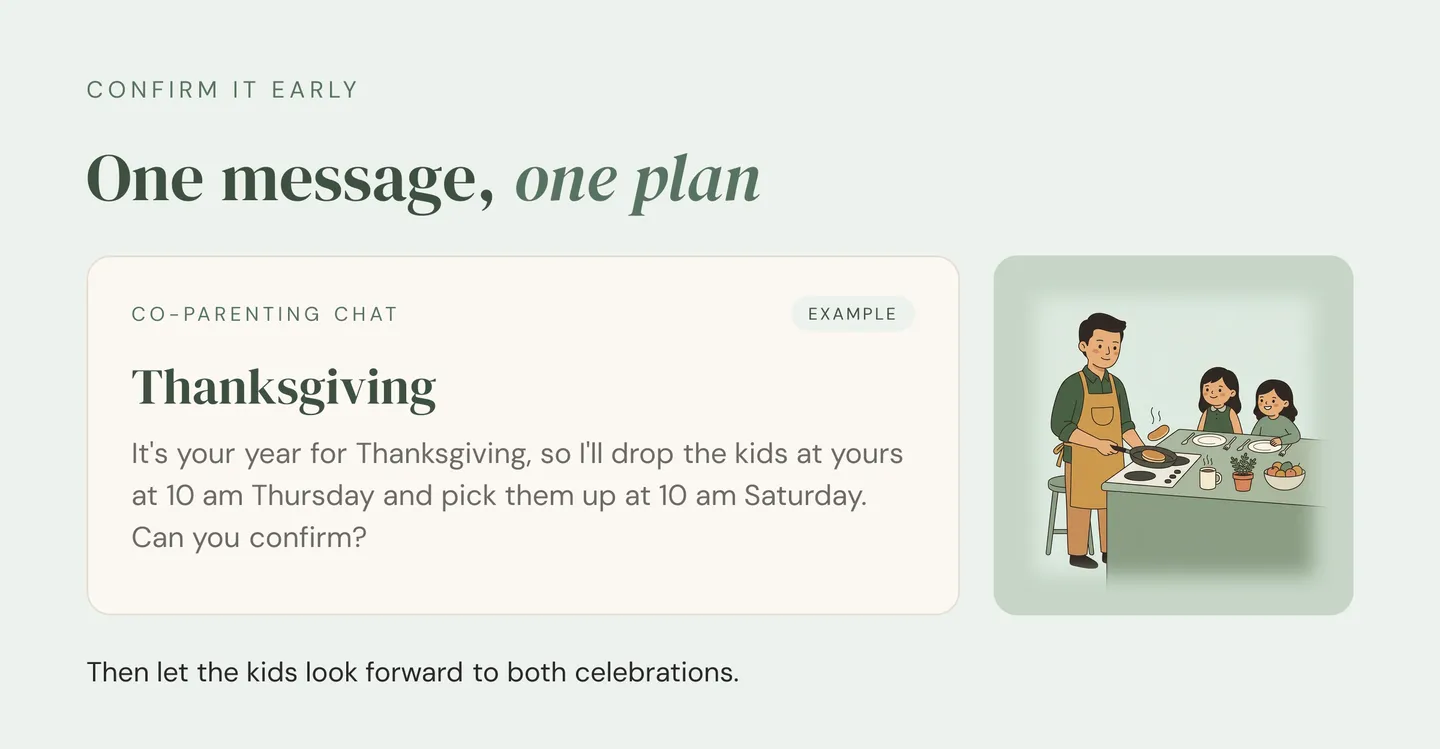
The other parent won't confirm the holiday plan. What should I do? Send one message saying what the plan says and what you'll be doing, then follow the plan. A clear, polite message you sent is better than a phone call nobody remembers the same way.
Can I take the kids out of state for Thanksgiving? It depends on your plan and your state. Check the travel section, give notice in writing if it asks for it, and if you're unsure, ask a family law attorney before you book.
How do I help the kids enjoy both homes? Talk about both celebrations positively, help them make or choose something small for the other parent, and keep handovers short and warm.