

Sharing costs without the arguments
In this guide
- Start with what your plan says
- 1. Agree before you spend
- 2. Keep every receipt
- 3. Ask for your share in one clear message
- 4. Agree a time to repay
- 5. When they don't pay
- 6. Plan ahead for the big ones
- 7. Keep money and time with the kids separate
- 8. Tax season
- Look after yourself
- Questions parents ask
- Try Clarity Witness
Money is one of the things co-parents argue about most, and the arguments tend to drag on for years. A $40 school trip turns into a week of messages. A pair of glasses becomes "you never pay for anything". Usually it's not the amount that causes the trouble. It's that nobody agreed how costs would work.
This guide covers how to agree costs before they happen, ask for your share without a fight, and keep a clear record, plus how Clarity Witness keeps it all straight.
Start with what your plan says
Child support usually covers the basics. Many parenting plans or orders also say how other costs are split, such as medical bills, school costs and activities. Check:
- Which costs are covered by child support, and which are split separately
- The split itself (half each, or based on income)
- Whether costs need agreeing in advance, and how
- How quickly the other parent has to pay their share
If your plan doesn't say, you can agree it between you in writing. Ask your attorney or mediator whether it should be added to the plan.
1. Agree before you spend
The simplest way to avoid money arguments is to agree costs before they happen. Many parents set a simple rule, for example that anything over an agreed amount needs a yes in writing first.
If they don't reply, you can follow up once. If it's not covered by your plan and they won't agree, decide whether to pay it yourself, without expecting repayment.
In Clarity Witness: a co-parenting chat is coming soon, with the Chat plan. Every message will be timestamped and can't be edited or deleted, so there's no argument later about whether they agreed. Until then, note what was agreed on your timeline the same day.
2. Keep every receipt
Take a photo of the receipt the day you pay. It's the one habit that saves the most arguments. Paper receipts fade, get lost or end up in a pocket that goes through the wash.
In Clarity Witness: when Insight opens, you'll add each cost to Expenses with the receipt attached. Everything's dated and in one place, so you can always see what was spent, when, and who owes what. For now, note each cost and the date you paid on your timeline.
3. Ask for your share in one clear message
Keep it short and factual. Include what it was for, the date, the total, their share and the receipt.
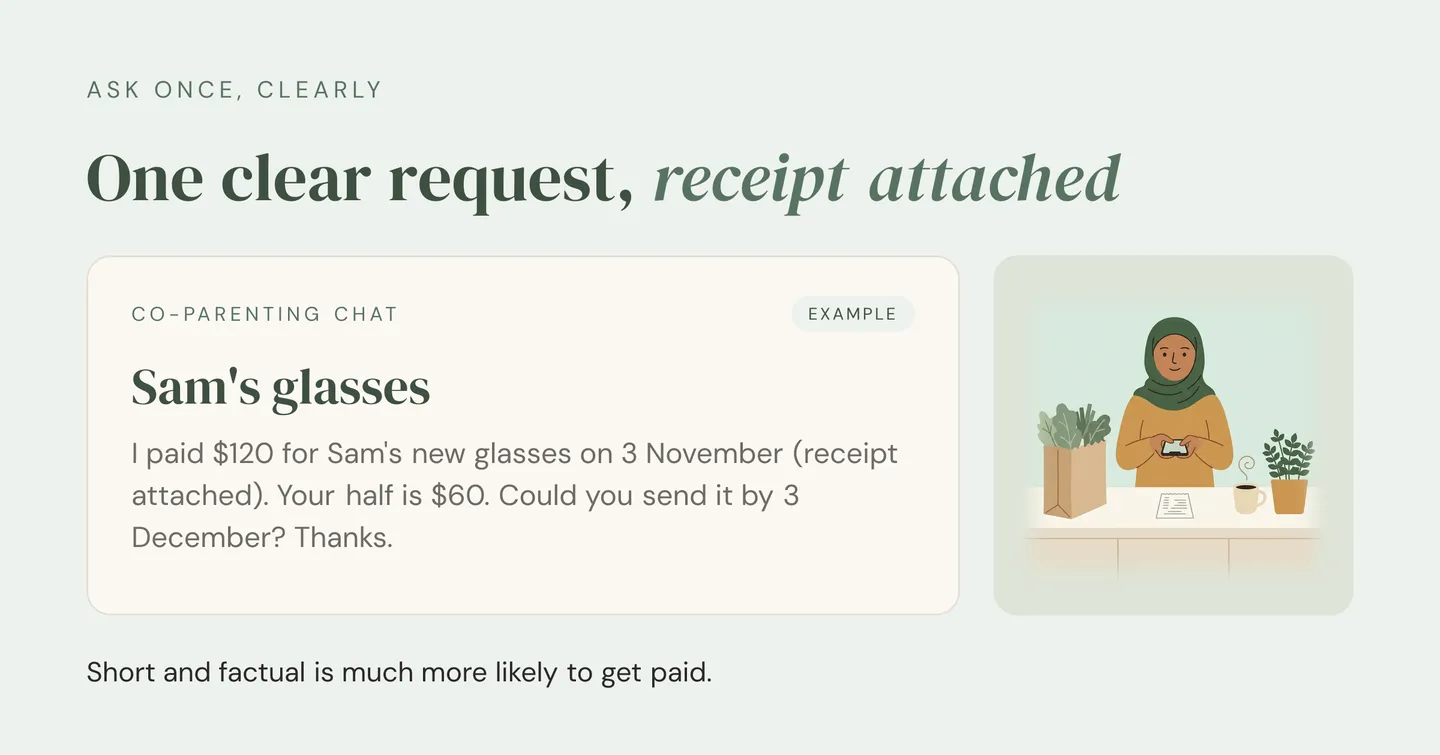
Avoid adding history, guilt or a list of everything else they owe. One clear request is much more likely to get paid than a long message.
4. Agree a time to repay
Many parents agree a set time, like 30 days. It turns "when are you going to pay?" into a simple date that's either been met or hasn't.
5. When they don't pay
It's frustrating, but arguing rarely gets the money back faster. Send one polite reminder, then keep a record.
If it keeps happening, talk to your attorney or mediator about your options. Bring a clear list of what's owed, with dates and receipts.
In Clarity Witness: note late repayments on your timeline as they happen. When Insight opens, Expenses will show what's outstanding at a glance, and Witness will point out the pattern, such as repayments that are regularly late, so you can show what's happening without a long explanation.
6. Plan ahead for the big ones
Braces, a first car, a school trip abroad, summer camp - some costs are large enough to need their own conversation. Raise them early, ideally months ahead, and agree in writing:
- Whether you're both happy for it to go ahead
- The total, and how it's split
- Whether it's paid in one go or in installments
- Who books it, and who pays the provider
For anything paid over time, a simple schedule ("$100 each on the 1st of every month until July") avoids a monthly argument about whether it's due.
In Clarity Witness: when Insight opens, add each installment to Expenses as it's paid, so you can both see how much is left at any point.
7. Keep money and time with the kids separate
This one matters. Courts generally treat parenting time and money as separate issues. Don't stop or cut short the other parent's time because they haven't paid, and don't let money disagreements spill into handovers or conversations the kids can hear.
8. Tax season
Who claims the kids on their taxes is a common January argument. Check what your parenting plan or order says, and talk to a tax professional if you're unsure. Don't rely on the other parent's word, and don't assume.
Look after yourself
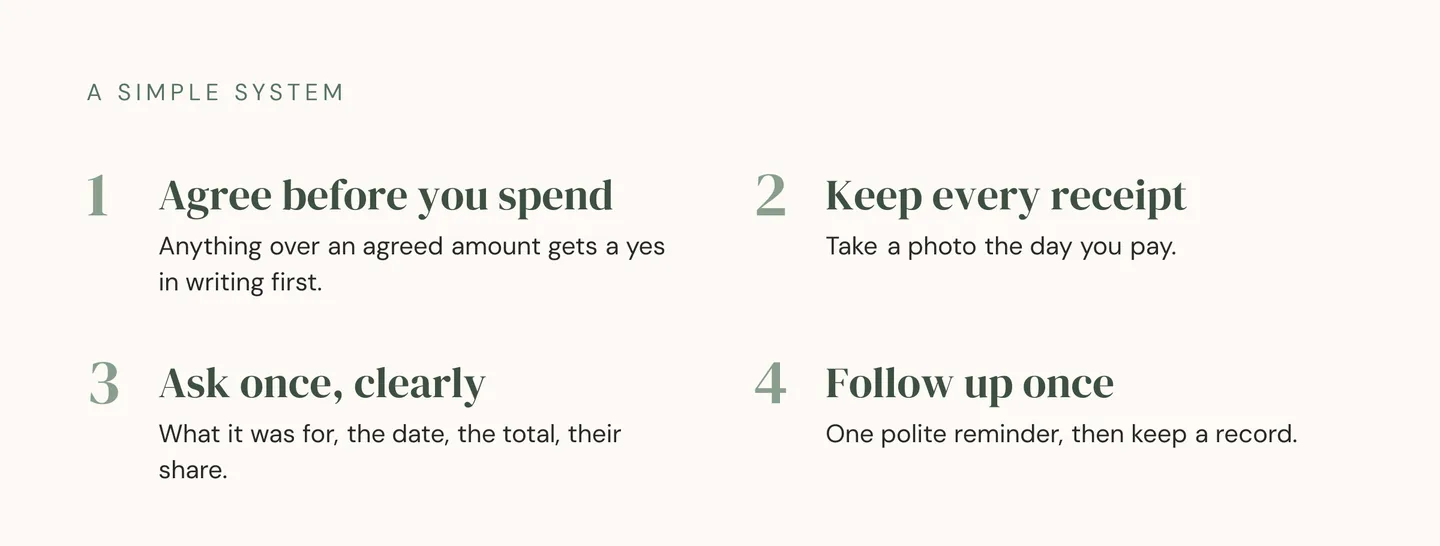
Money worries pile on top of everything else after a separation. Having a clear system - agree, keep the receipt, ask once, follow up once - takes a lot of the emotion out of it. You don't have to win every argument about money. You just need a clear record.
Questions parents ask
What counts as an extra cost? It depends on your plan, but it often includes school trips, activities, sports gear, tutoring, braces, glasses and medical costs that insurance doesn't cover. If you're not sure, agree it in writing first.
Should I pay for something if they won't agree to split it? That's your call. If it's important for your child, you might choose to pay it yourself. Just don't expect repayment for something they didn't agree to, unless your plan says otherwise.
Can I stop their time with the kids if they don't pay? No. Time with the kids and money are usually separate issues, and holding back parenting time can cause problems for you. Talk to your attorney about unpaid costs instead.
What if we earn very different amounts? Some plans split extra costs based on each parent's income rather than half and half. If yours doesn't say, it's worth raising with your attorney or mediator.
Should we use a shared account? Some parents do, for things like school fees or activities. It can work well if you both trust it. Agree the rules in writing first, and keep receipts either way.