

Before you sign: what parents wish they'd put in their parenting plan
In this guide
- How to use this list
- 1. New partners meeting the kids
- 2. Right of first refusal
- 3. How you'll communicate
- 4. Holidays and birthdays, spelled out
- 5. Handovers
- 6. Travel
- 7. Moving home
- 8. Calls with the kids
- 9. Costs beyond the basics
- 10. Social media
- 11. Belongings and keepsakes
- Already signed?
- Questions parents ask
- Try Clarity Witness
A parenting plan is usually agreed at the most stressful point of a separation, when everyone just wants it done. Years later, many parents say the same thing: "I wish we'd put that in writing."
Here are the details parents most often wish they'd agreed before signing, why each one matters, and how Clarity Witness helps once the plan is in place. What's allowed and what's usual varies by state, so treat this as a list of questions to raise with your attorney or mediator, not a template.
How to use this list
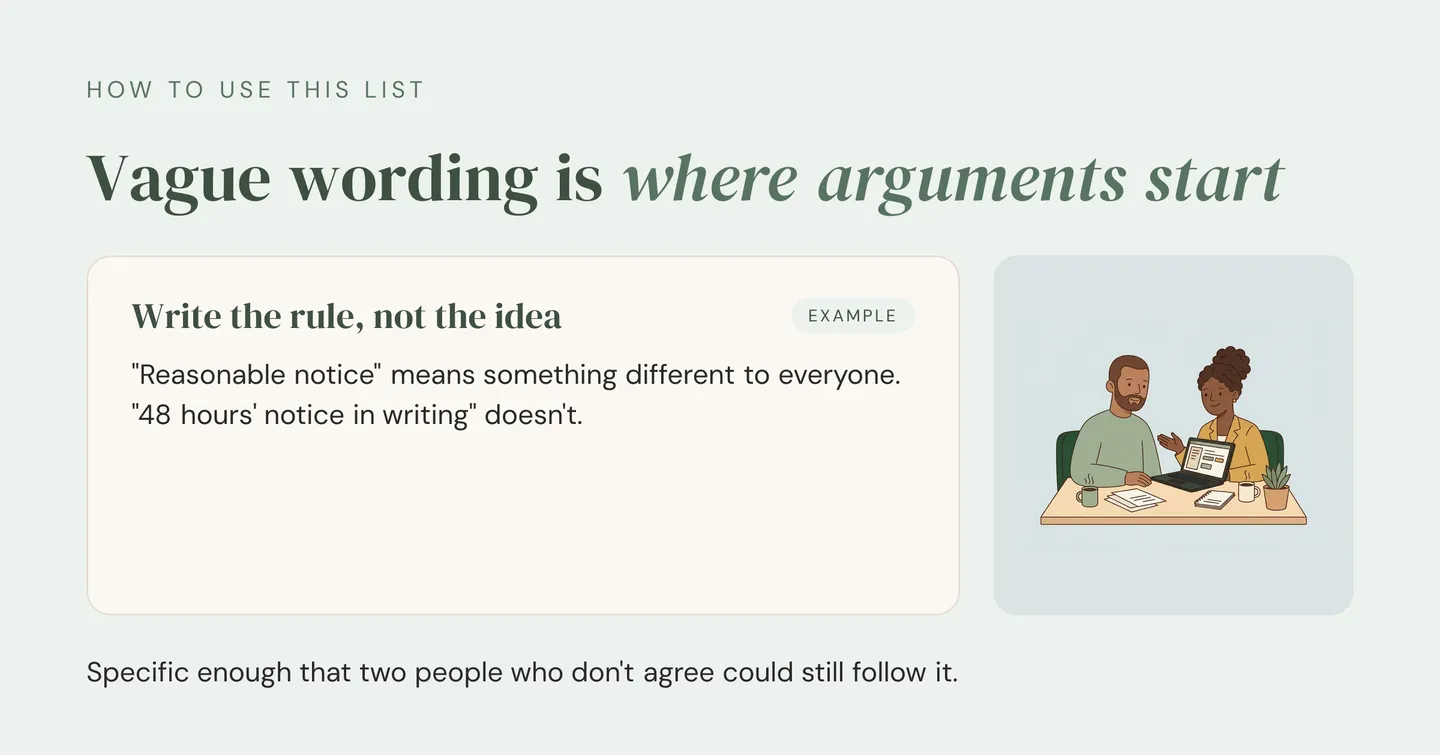
Go through it before your next meeting with your attorney or mediator. For each item, ask: does our draft plan cover this, and is it specific enough that two people who don't agree could still follow it? Vague wording is where most arguments start. "Reasonable notice" means something different to everyone. "48 hours' notice in writing" doesn't.
1. New partners meeting the kids
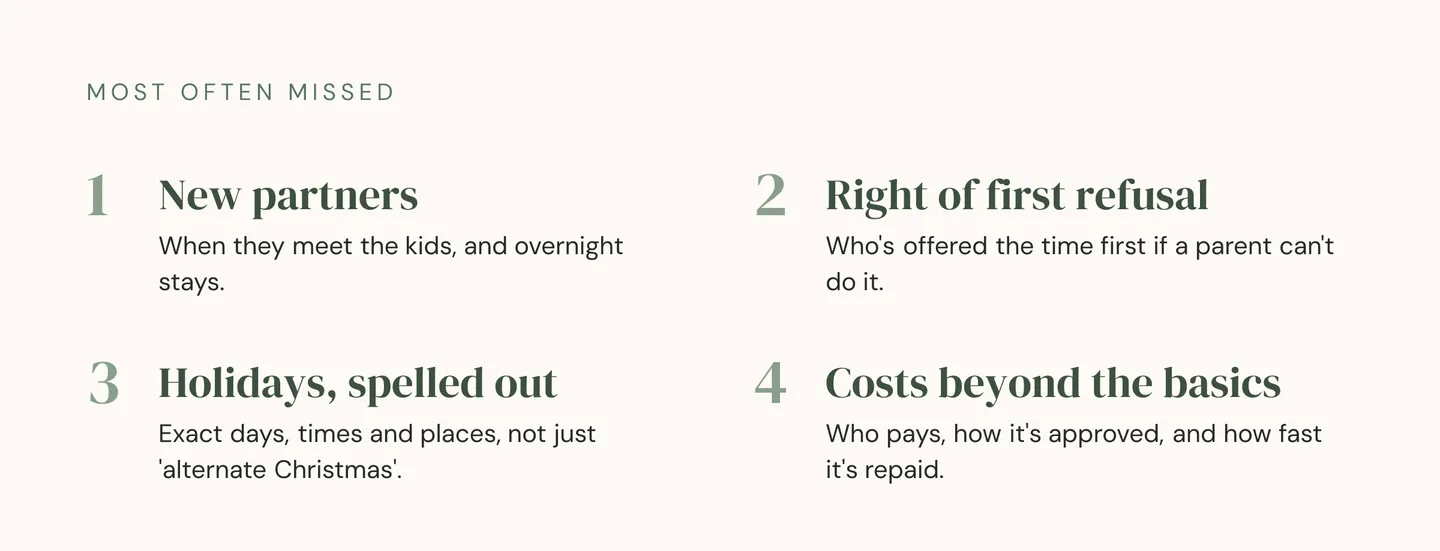
How long a parent should be in a relationship before a new partner meets the children, and whether a new partner can stay overnight while the kids are there. Some plans set a waiting period; others just require notice.
Why it matters: it's one of the most common sources of conflict after separation, and it's very hard to agree once it's already happened.
2. Right of first refusal
If one parent can't look after the kids during their time, the other parent is offered the time before a sitter or relative. Agree how long an absence triggers it (four hours, overnight) and how quickly the other parent has to answer.
Why it matters: without it, one parent can spend their time elsewhere while the kids are with a sitter, and the other parent has no say.
3. How you'll communicate
One agreed way to message about the kids, and reasonable reply times for routine and urgent matters. Many plans and court orders now name a specific co-parenting app, so arrangements aren't scattered across texts, calls and social media.
Why it matters: when there's one channel, there's one record, and far less room for "I never got that message".
In Clarity Witness: a co-parenting chat is coming soon, with the Chat plan, where every message is timestamped and can't be edited or deleted once it's sent.
4. Holidays and birthdays, spelled out
Not just "alternate Christmas". Write down the exact days and times, where handovers happen, how school breaks are split, and how the kids' birthdays and each parent's birthday are handled. Don't forget Mother's Day, Father's Day and any religious or cultural holidays that matter to your family.
Why it matters: holidays are when plans get tested hardest, and "I thought it was my year" is a miserable argument to have on the 23rd of December.
5. Handovers
Who can do pickups and drop-offs, where they happen, how long the other parent waits if someone's late, and what happens to the time if a handover is missed.
Why it matters: handovers happen every week, so small gaps in the plan turn into regular friction.
6. Travel
How much notice is needed for trips, whether travel out of state or abroad is allowed, who holds the passports, and whether a signed consent letter is needed. Include sharing an itinerary and a contact number.
7. Moving home
How much notice a parent must give before moving, and how far a move can be before the plan needs to be revisited. Some states have specific rules about this, so ask what applies where you live.
8. Calls with the kids
When and how often the kids can call or video chat with the other parent, and who sets it up. Younger children often need a set time; teenagers usually want more say.
9. Costs beyond the basics
Who pays for activities, school trips, tutoring, braces, glasses and other costs that child support may not cover. Agree how costs are approved in advance, how they're split, and how quickly the other parent repays their share.
Why it matters: money disagreements tend to drag on for years. A clear rule now saves a lot of messages later.
In Clarity Witness: Expenses (coming soon, with Insight) tracks shared costs with the receipt attached, so it's always clear what was spent, when, and who owes what.
10. Social media
Whether either parent can post photos of the kids, and whether either parent can post about the other parent or the case.
11. Belongings and keepsakes
What travels between homes, how school uniforms, devices and medication are returned, and how family keepsakes and sentimental items are handled.
Why it matters: it sounds small, but repeated "the bag didn't come back" is one of the most common day-to-day frustrations parents describe.
Already signed?
You're not stuck. Plans can usually be changed, either by agreement or through the court, when circumstances change. What helps most is a clear, dated record of how the current plan works in practice: which parts are working, which keep causing problems, and how often.
If a plan is ever reviewed, "it happens all the time" is hard to show. "Eleven late handovers since August, each noted on the day" is not.
If you and the other parent agree a change informally, put it in writing, even if it's just a confirmed message. Informal changes that only exist in someone's memory are a common source of conflict.
In Clarity Witness: your timeline keeps a dated record of what actually happens, and you can download it to take to your attorney or mediator. When Insight opens, Witness reads it and points out where things keep going wrong.
Questions parents ask
Do I need an attorney to agree a parenting plan? You don't always need one, but it's wise to have one review the plan before you sign, especially if there's conflict. Many parents also use a mediator to agree the details.
Can we change the plan ourselves later? You can agree changes between you, but they may not be enforceable unless they're made official. Ask an attorney how changes work in your state.
What's a standard schedule? Many states have a default schedule courts use if parents don't agree their own. In Texas, for example, it's called the Standard Possession Order. Your plan can follow it, adjust it, or replace it.
Should everything be spelled out, or is some flexibility good? Both. Spell out the things you're likely to disagree about, and leave room for flexibility where you already work well together. You can always agree to be more flexible than the plan. It's much harder to be stricter than it.
Try Clarity Witness
Clarity Witness helps from the day the plan is signed. Today, you can keep a private, timestamped record of what really happens. Coming soon: a co-parenting chat where messages can't be edited or deleted, Expenses for shared costs, and Witness to spot when the plan isn't working.
Logging comes with the Free plan today: your timeline, the people involved, and a personal record you can download. Witness reads it all when Insight opens. claritywitness.com
General information, not legal advice. Parenting plan rules vary by state. Talk to a family law attorney or mediator in your state before you sign.
A new guide, every two weeks.
Get the next guide, a pattern worth knowing and what's new in Clarity Witness. One short email, every other week.
Keep it all in one place
Logging comes with the Free plan today: your timeline, the people involved, and a personal record you can download. Witness reads it all when Insight opens.